
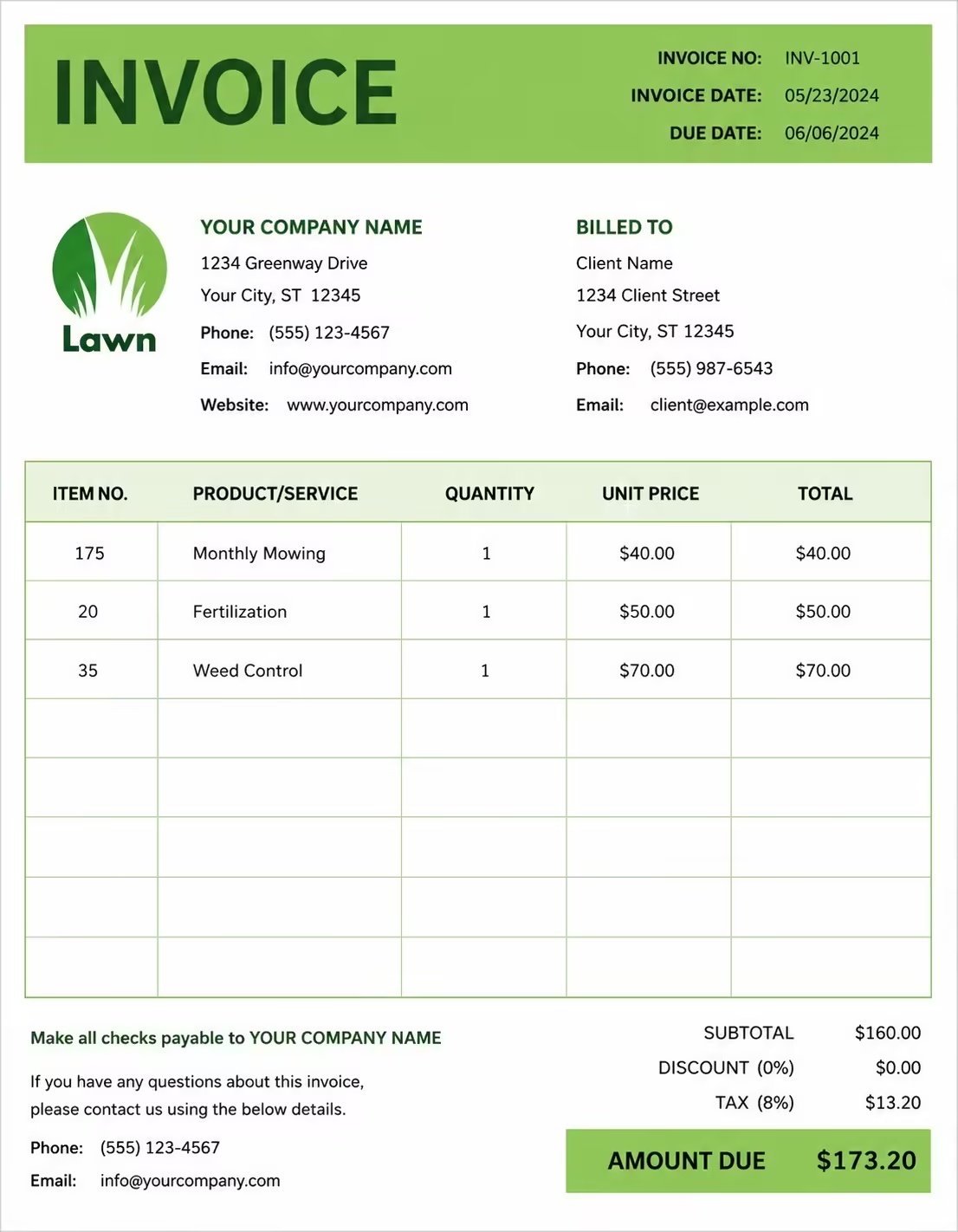
Free Logistics Invoice Template
Free invoice templates for logistics companies, freight coordinators, 3PL providers, shipping businesses, warehouse operators, delivery teams, distribution companies, freight forwarders, and transport service providers. Download and edit in PDF, Word, Excel, Google Docs, or Google Sheets.
Use this logistics invoice template to bill for freight movement, local delivery, warehousing, order fulfillment, pallet handling, packing, loading, customs support, fuel surcharges, accessorial fees, taxes, discounts, deposits, and payment terms in a clear and professional way.
Download the app and manage invoices anywhere


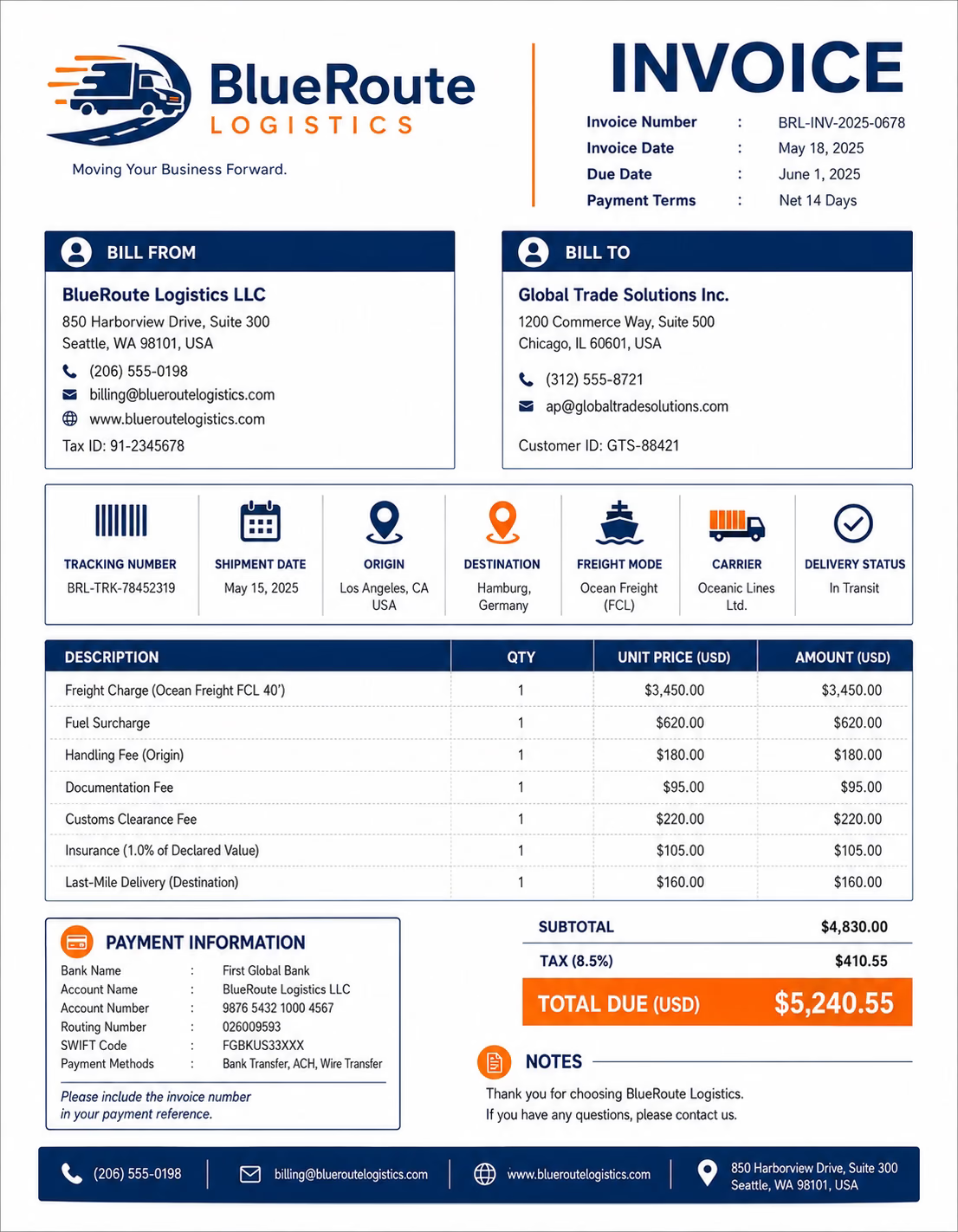
Download Free Logistics Invoice Templates
Download a template, then edit it in PDF, Word, Excel, Google Docs, or Google Sheets. Print it, save it, or send it to your customer when the shipment, delivery route, storage period, or logistics billing milestone is complete.
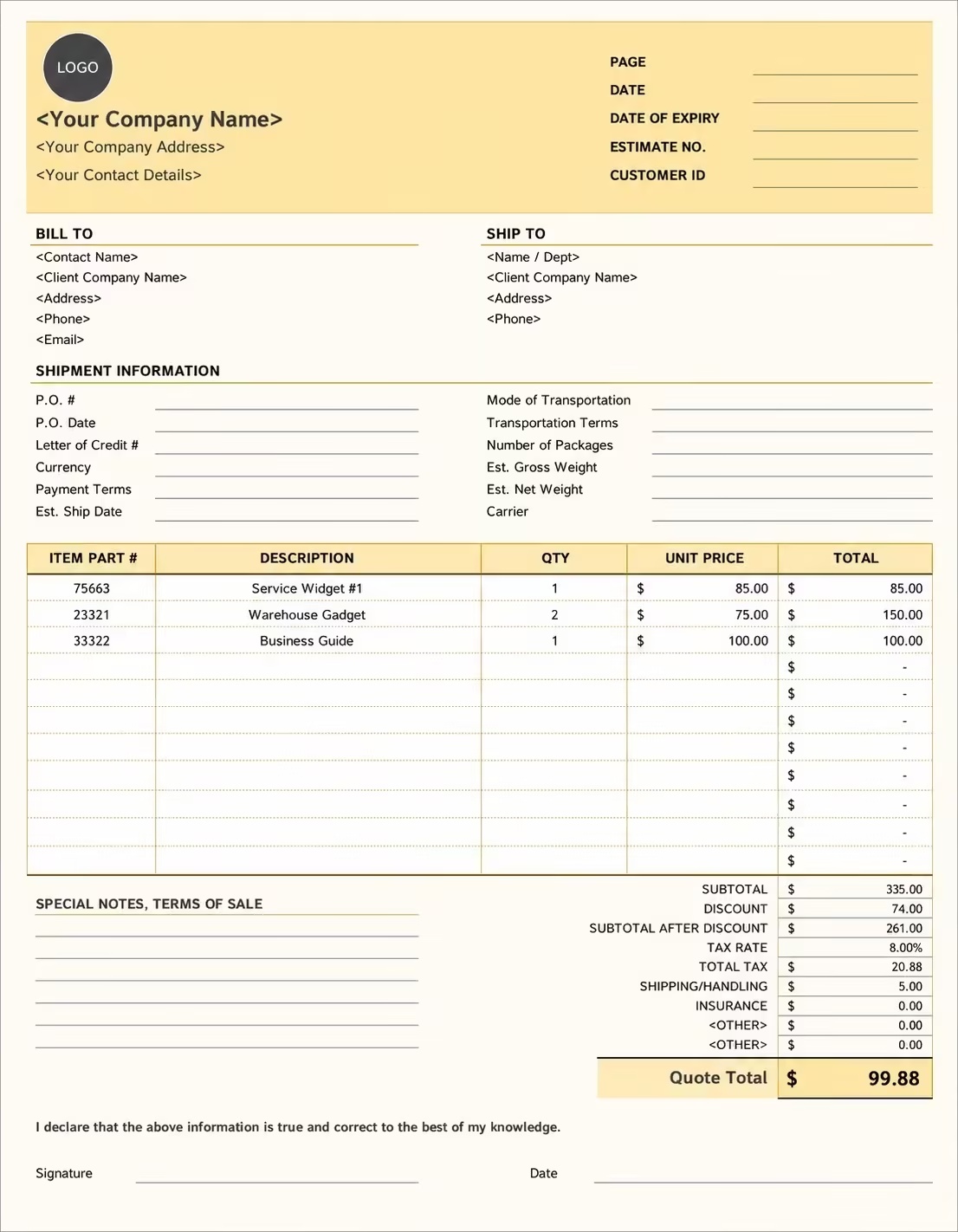
Editable Logistics Invoice Template
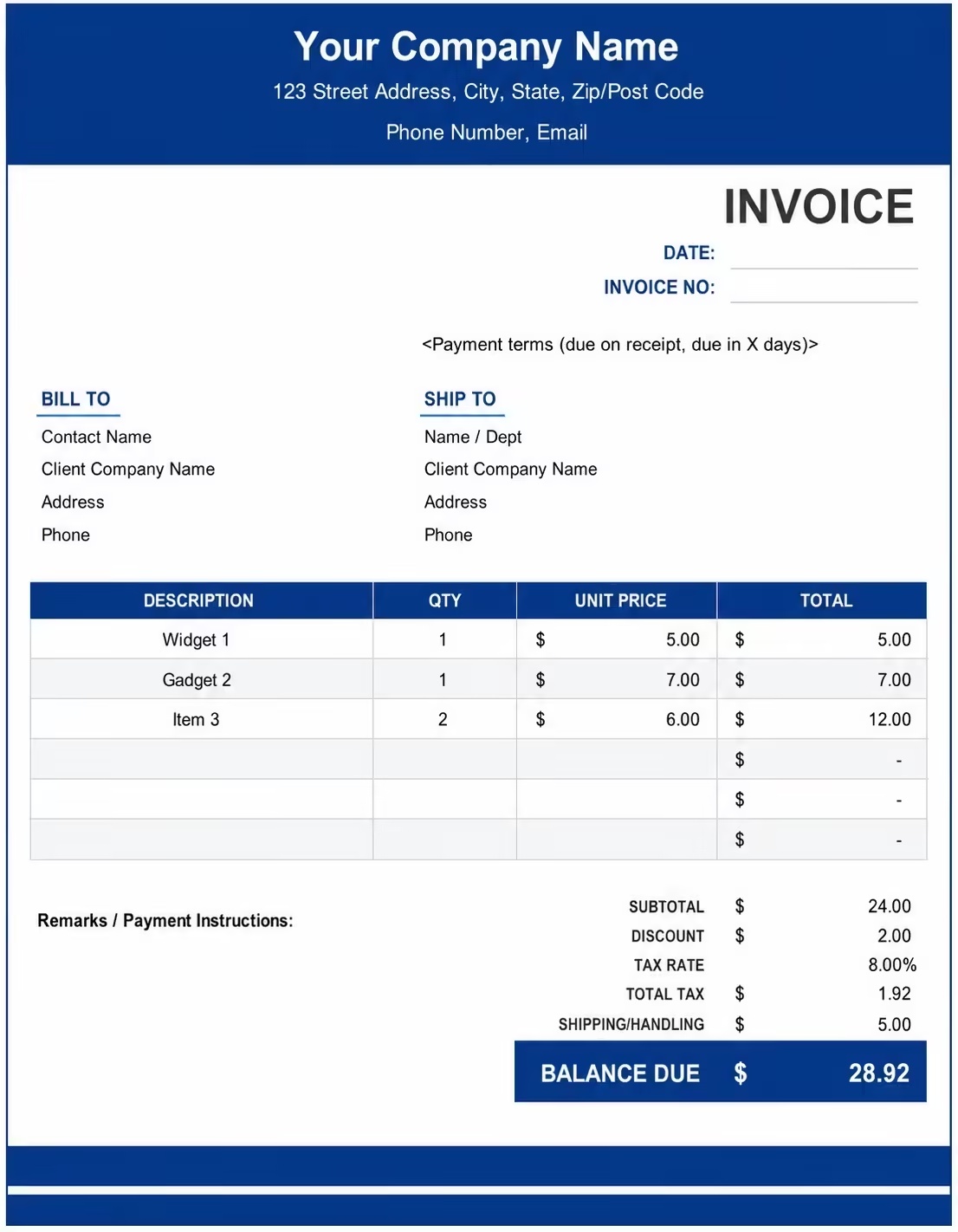
Printable Logistics Invoice Template
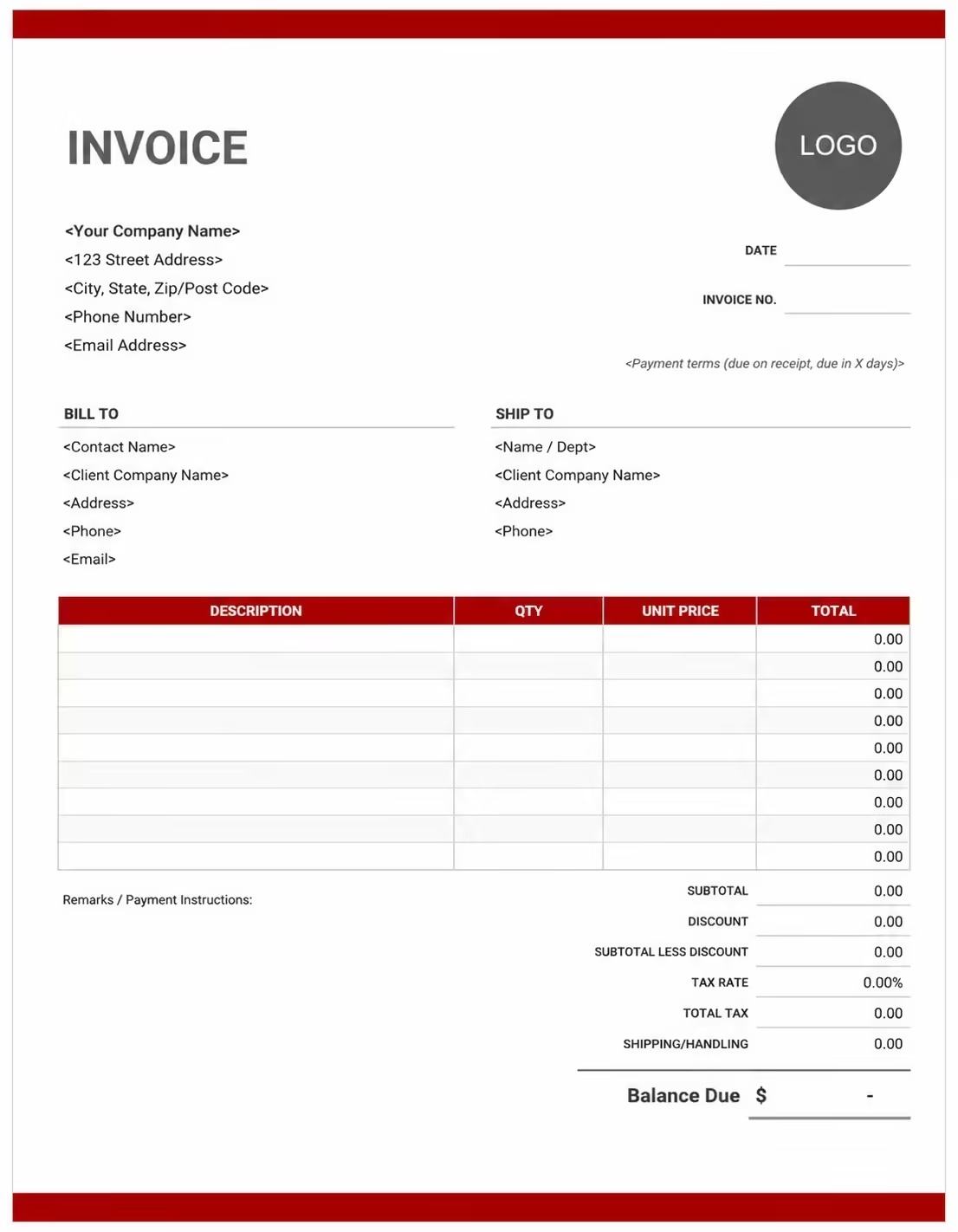
Free Logistics Invoice Template
Use these templates for logistics providers, shipping companies, freight forwarders, 3PL teams, warehouse operators, delivery businesses, distribution companies, fulfillment providers, and transport coordinators.
How to Invoice for Logistics Services
A good logistics invoice should clearly show the customer details, shipment reference, service completed, pickup and delivery information, freight or handling charges, storage fees, surcharges, taxes, deposits, and payment terms.
Download Free TemplateIn 5 Steps:
- Confirm the customer details, shipment reference, pickup address, delivery address, service level, carrier details, package count, freight terms, accessorial charges, and payment terms before billing.
- Record completed logistics work such as freight coordination, pickup, delivery, storage, packing, pallet handling, loading, unloading, order fulfillment, documentation, or customs support.
- Track direct costs such as freight charges, fuel surcharge, handling fees, warehouse storage, packaging materials, carrier fees, tolls, detention, demurrage, insurance, and approved reimbursements.
- Calculate service charges, shipment fees, delivery fees, warehouse fees, accessorial charges, taxes if applicable, discounts, deposits, and the final balance due.
- Send the invoice with payment options, due date, shipment notes, delivery confirmation, reference numbers, and any remaining balance instructions.
With Invoize, you can create logistics invoices faster, save customer details, reuse common freight and handling line items, add shipment notes, include pickup and delivery details, and track payments from your phone.
What to Include in a Logistics Invoice
A professional logistics invoice should include the details needed to identify the customer, shipment, services completed, charges, delivery details, payment terms, and final balance.
Invoice and Customer Details
- Invoice numberHelps track the invoice, shipment billing record, payment status, and accounting history.
- Customer name, company name, billing contact, and addressShows who requested the logistics service and who is responsible for payment.
- Logistics provider, freight company, warehouse, or delivery business detailsShows which business completed the logistics work and where payment should be sent.
- Shipment reference, purchase order, job number, bill of lading, or tracking numberConnects the invoice to the correct shipment, order, route, carrier record, or customer approval.
- Invoice date, due date, pickup date, delivery date, or billing periodShows when the logistics service was completed, billed, delivered, and when payment is expected.
Logistics Service Details
- Service descriptionShows the freight, delivery, warehousing, fulfillment, handling, customs support, or logistics coordination included in the invoice.
- Pickup and delivery informationRecords origin, destination, route, delivery location, receiver details, and delivery confirmation when available.
- Package, pallet, container, weight, or volume detailsShows the quantity, size, weight, pallets, cartons, units, or shipment volume used to calculate charges.
- Handling, loading, unloading, storage, or fulfillment chargesShows operational work such as warehouse handling, pallet movement, order picking, packing, labeling, loading, unloading, and storage.
- Rate, unit price, lane price, delivery fee, storage rate, or fixed logistics feeShows the agreed pricing method and how the logistics total was calculated.
Payment and Final Notes
- Fuel, tolls, insurance, accessorial, or carrier chargesRecords extra shipment costs, fuel surcharges, tolls, carrier fees, insurance, detention, demurrage, and approved additional charges.
- Discounts, deposits, retainers, or advance paymentsShows credits, advance payments, retainers, discounts, or amounts already paid.
- Subtotal, tax, surcharges, additional charges, and total amount dueShows the final amount the customer needs to pay.
- Payment methodsLists bank transfer, card payment, online payment, check, or other accepted payment options.
- Logistics notes or payment termsRecords delivery notes, proof of delivery, service terms, late fees, due date, liability notes, or balance instructions.
Billing Scenarios for Logistics Businesses
Use clear invoice labels so customers understand the shipment, delivery route, warehouse work, freight charges, accessorial fees, deposits, and final amount due.
| Scenario | Invoice line items | Best used for | How to describe it |
|---|---|---|---|
| Freight shipment invoice | Origin, destination, shipment reference, weight, freight rate, delivery details | Freight companies, freight brokers, and transport coordinators. | Show shipment number, pickup and delivery details, freight rate, and balance due. |
| Local delivery invoice | Delivery route, package count, distance, service fee, proof of delivery | Local couriers, delivery services, and same-day delivery teams. | Include pickup location, delivery location, delivery date, and delivery confirmation. |
| Warehouse handling invoice | Receiving, pallet handling, storage, picking, packing, loading | Warehouses, 3PL providers, and fulfillment centers. | Separate handling, storage, picking, packing, and loading charges for clarity. |
| 3PL fulfillment invoice | Order fulfillment, pick and pack, packaging, shipping support, returns | Third-party logistics companies and ecommerce fulfillment providers. | List order counts, package counts, storage period, fulfillment fees, and shipping support. |
| Freight forwarding invoice | Documentation, carrier coordination, export/import support, freight fees | Freight forwarders and international logistics providers. | Show shipment reference, documentation fees, carrier charges, and forwarding service fees. |
| Pallet storage invoice | Storage period, pallet quantity, location, handling, monthly fee | Warehouses and distribution facilities. | Include pallet count, storage dates, storage rate, and handling charges. |
| Accessorial charge invoice | Detention, demurrage, liftgate, inside delivery, waiting time, special handling | Carriers and logistics providers billing extra service conditions. | Explain why the charge applies and connect it to the shipment or delivery record. |
| Distribution service invoice | Bulk delivery, route planning, store deliveries, handling, proof of delivery | Distribution companies and wholesale delivery teams. | Show delivery stops, route details, number of deliveries, and service date. |
| Customs support invoice | Customs paperwork, documentation, duties support, brokerage coordination | Freight forwarders and logistics companies supporting imports or exports. | Separate customs support fees from duties, taxes, freight, and carrier charges. |
| Monthly logistics retainer | Recurring coordination, account support, reporting, storage, freight management | Logistics consultants, managed logistics teams, and ongoing B2B clients. | Show billing period, included services, recurring fee, and extra charges outside the retainer. |
Create Invoice Now
☝️ Create a professional invoice in seconds.
Common Charges and Fees for Logistics Invoices
Logistics invoices often include freight charges, delivery fees, warehouse handling, storage, fuel surcharges, packaging, accessorial fees, and other shipment-specific costs.
| Charge or service | Unit | When to use | How to show it |
|---|---|---|---|
| Freight charge | Shipment transport, carrier movement, or lane-based freight | When billing transportation between origin and destination | Freight transportation charge |
| Delivery fee | Local delivery, route delivery, courier service, or last-mile delivery | When billing pickup and delivery work | Local delivery service |
| Fuel surcharge | Fuel cost adjustment based on route, mileage, or carrier terms | When fuel costs are billed separately | Fuel surcharge |
| Handling fee | Receiving, pallet movement, loading, unloading, sorting, or warehouse labor | When handling work is separate from freight | Warehouse handling fee |
| Storage fee | Warehouse storage, pallet storage, bin storage, or temporary holding | When goods are stored before delivery or fulfillment | Storage fee for billing period |
| Pick and pack fee | Order picking, packing, labeling, and preparation for shipment | For fulfillment and 3PL services | Pick and pack service |
| Packaging materials | Boxes, pallets, wrap, labels, inserts, cartons, or protective materials | When packaging is billed separately | Packaging materials |
| Loading or unloading fee | Dock labor, forklift use, pallet loading, container unloading | When loading work is not included in the base rate | Loading and unloading service |
| Toll or route fee | Road tolls, bridge fees, route charges, or special access costs | When tolls are passed through to the customer | Route and toll charges |
| Insurance fee | Shipment insurance, declared value coverage, or cargo protection | When customer-approved coverage is added | Shipment insurance |
| Detention fee | Driver or equipment waiting time beyond allowed free time | When pickup or delivery delays create extra time | Detention charge |
| Demurrage fee | Container or freight holding charges beyond allowed free time | For port, terminal, or container delays | Demurrage charge |
| Liftgate or special equipment fee | Liftgate truck, forklift, pallet jack, or special handling equipment | When special equipment is needed for delivery | Liftgate service fee |
| Documentation fee | Bills of lading, customs paperwork, delivery documents, reports | When paperwork or export/import support is billed | Logistics documentation fee |
| Tax or VAT | Required tax based on location or service type | When taxes apply to logistics services | Sales tax / VAT |
Common Logistics Invoicing Mistakes
Avoid vague shipment descriptions, missing references, unclear surcharges, and mixed freight charges so customers can review and pay logistics invoices faster.
| Mistake | Why it causes problems | How to fix it |
|---|---|---|
| Not adding shipment references | Customers may not know which shipment, order, or delivery the invoice belongs to. | Include tracking number, bill of lading, purchase order, shipment ID, or job reference. |
| Mixing freight and accessorial fees | Extra charges can look unclear or disputed when they are not separated. | List freight, fuel, handling, detention, demurrage, and special services as separate line items. |
| Missing pickup and delivery details | The client may not be able to match the invoice to the correct route or delivery. | Add origin, destination, pickup date, delivery date, and delivery confirmation when available. |
| Using vague service descriptions | Terms like logistics service or delivery work do not explain what was completed. | Describe the exact service, such as freight coordination, pallet handling, pick and pack, or local delivery. |
| Not showing weight, pallet count, or package quantity | Customers may question how transport, storage, or handling charges were calculated. | Include weight, volume, pallets, cartons, packages, containers, or order counts when relevant. |
| Forgetting fuel surcharge details | Fuel charges can be disputed if the basis is unclear. | Show fuel surcharge as its own line item and mention route, carrier rule, or agreed fee when needed. |
| Leaving out storage dates | Storage charges can be confusing without a billing period. | Add storage start date, end date, pallet count, and rate. |
| Not separating reimbursable carrier costs | Carrier, toll, insurance, or customs costs may be mistaken for service markup. | Separate reimbursements from logistics service fees and add notes when useful. |
| Missing payment terms | Clients may delay payment if the due date or payment method is unclear. | Add due date, payment method, late fee policy, and balance instructions. |
| Sending invoices without proof details | Logistics clients may request confirmation before paying. | Add proof of delivery, delivery note, receiving confirmation, or shipment status where available. |
More Invoice Templates You May Like
Explore closely related invoice templates for logistics work, similar services, and nearby billing scenarios before choosing the best format for your customer.
Questions
Frequently Asked Questions
What is a logistics invoice?
A logistics invoice is a billing document used by logistics companies, 3PL providers, freight forwarders, warehouses, delivery businesses, and transport coordinators to charge customers for shipment, delivery, warehousing, handling, fulfillment, and related logistics services.
What should a logistics invoice include?
A logistics invoice should include your business details, customer details, invoice number, invoice date, due date, shipment reference, pickup and delivery details, service descriptions, quantities, rates, surcharges, taxes, deposits, and final amount due.
Can I use this template for freight and delivery services?
Yes. This template works for freight shipments, local deliveries, courier services, distribution routes, freight coordination, and last-mile delivery billing.
Can I use this template for warehouse and 3PL billing?
Yes. You can use it for warehouse storage, pallet handling, receiving, picking, packing, fulfillment, returns, loading, unloading, labeling, and monthly 3PL service invoices.
Should fuel surcharge be listed separately?
Yes. Fuel surcharge should usually be shown as a separate line item so the customer can see the base logistics service charge and the fuel-related adjustment clearly.
How do I invoice for accessorial charges?
List accessorial charges separately with a short explanation. Common accessorial charges include detention, demurrage, liftgate service, inside delivery, waiting time, special handling, and additional delivery attempts.
Should I include pickup and delivery addresses?
Yes. Including pickup and delivery addresses helps the customer connect the invoice to the correct shipment, route, order, delivery record, or proof of delivery.
Can I add storage fees to a logistics invoice?
Yes. Add the storage period, pallet count, storage rate, handling fee, and total storage charge. This is useful for warehouses, fulfillment centers, distribution facilities, and 3PL providers.
How should deposits or advance payments appear?
Show the full logistics charge, deposit or advance payment received, any previous payments, the current charge, and the remaining balance due. This helps customers understand what has already been paid.
What payment terms should a logistics invoice include?
Common payment terms include due on receipt, Net 7, Net 15, Net 30, prepaid freight, deposit before shipment, or monthly billing. Add the due date, accepted payment methods, late fee policy, and balance instructions.