
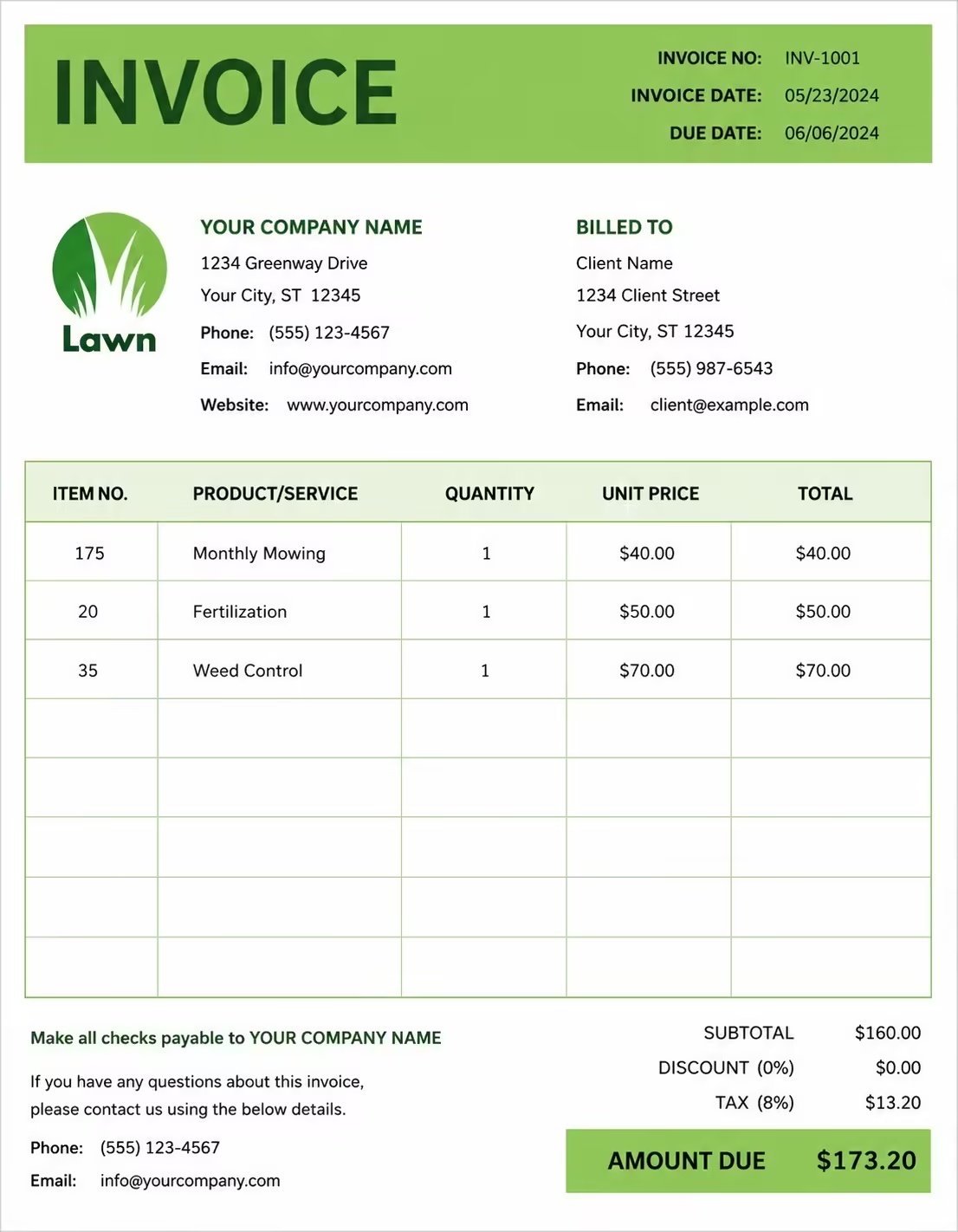
Free Trucking Invoice Template
Free invoice templates for trucking companies, independent truck drivers, freight haulers, delivery services, owner-operators, logistics providers, and transport businesses. Download and edit in PDF, Word, Excel, Google Docs, or Google Sheets.
Use this template to bill for freight delivery, mileage, hauling services, fuel charges, loading, unloading, waiting time, permits, tolls, taxes, discounts, deposits, and payment terms in a clear and professional way.
Download the app and manage invoices anywhere


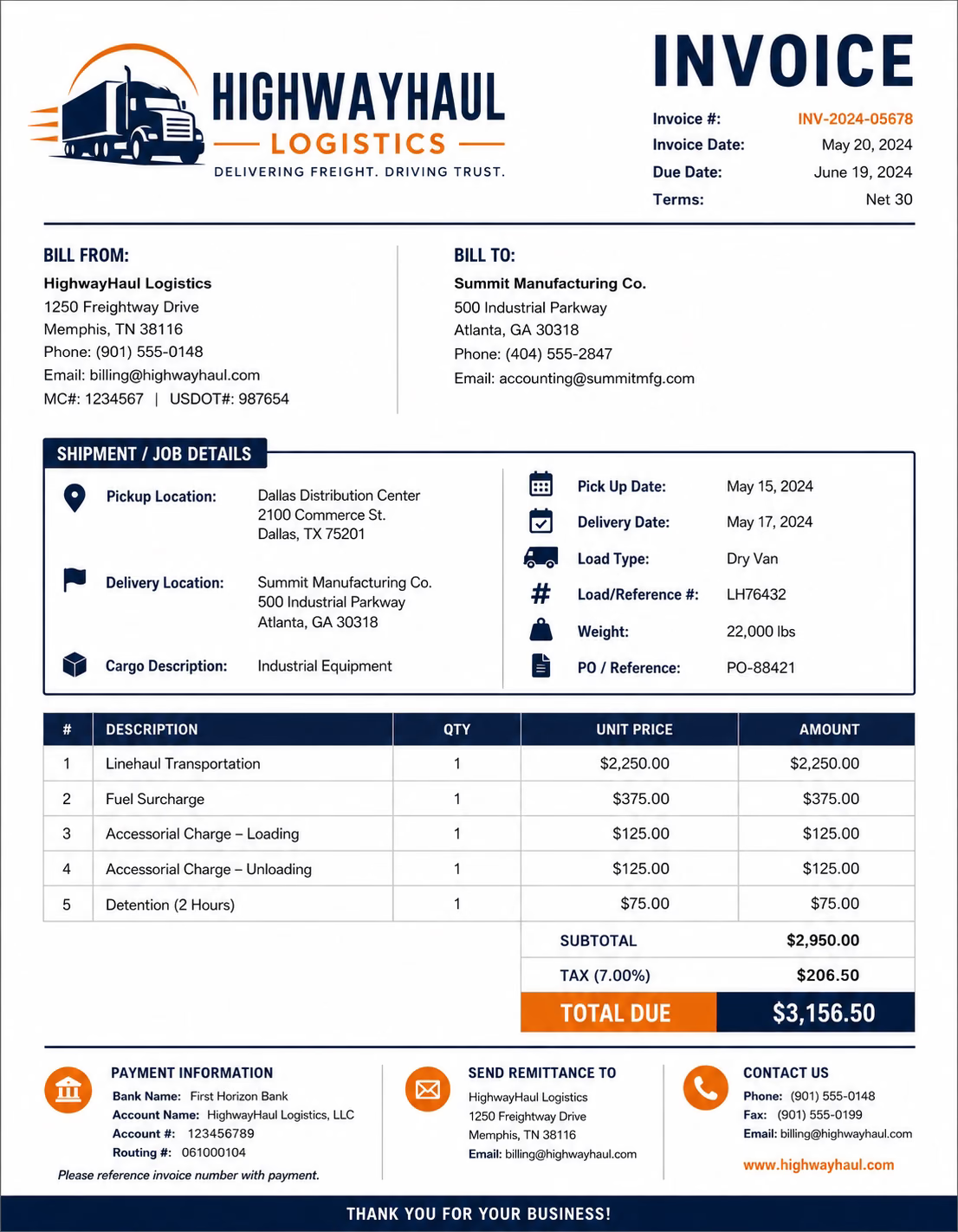
Download Free Trucking Invoice Templates
Download a trucking invoice template, then edit it in PDF, Word, Excel, Google Docs, or Google Sheets. Print it, save it, or send it to your client when the freight hauling, delivery route, transport job, or trucking service is complete.
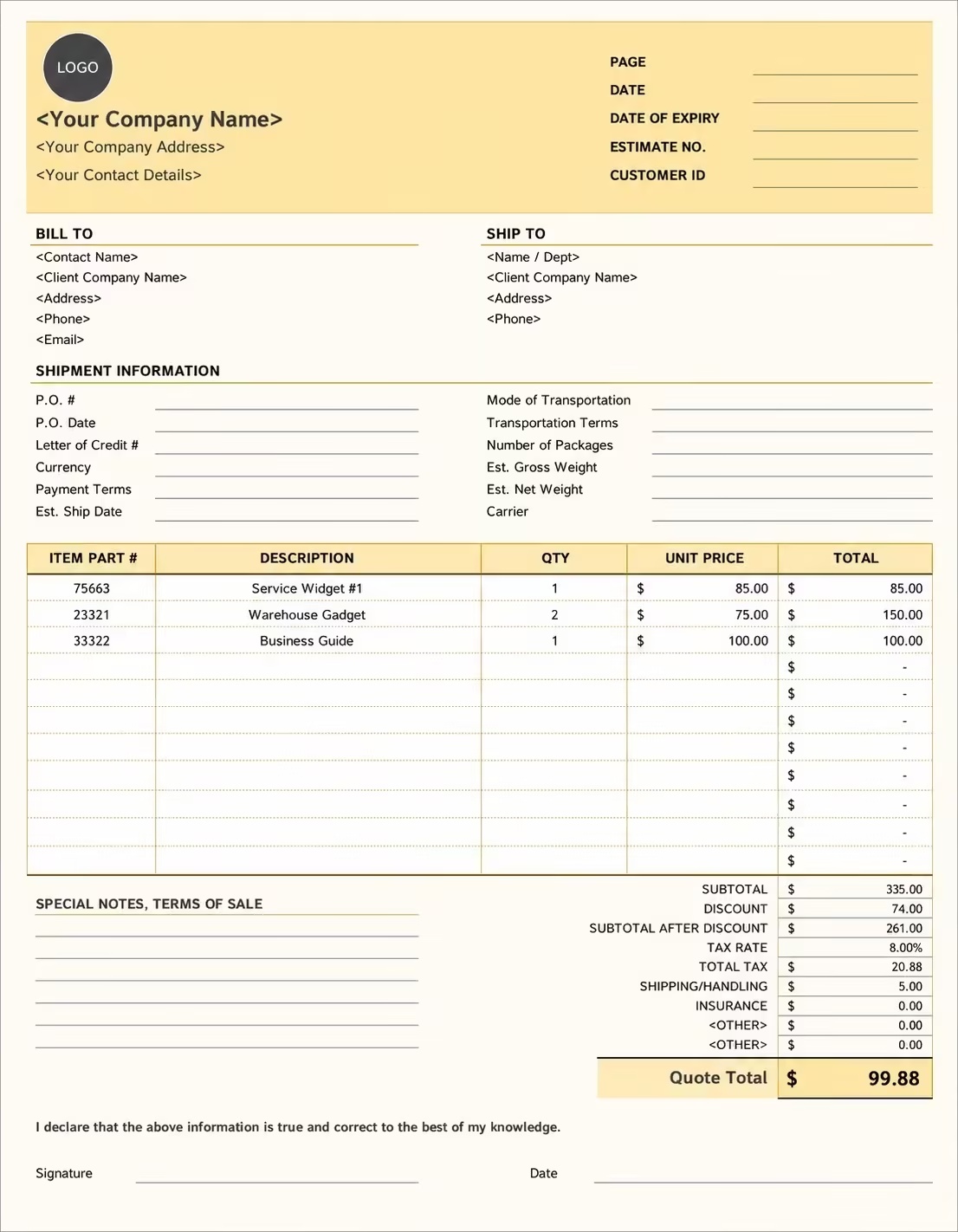
Editable Trucking Invoice Template
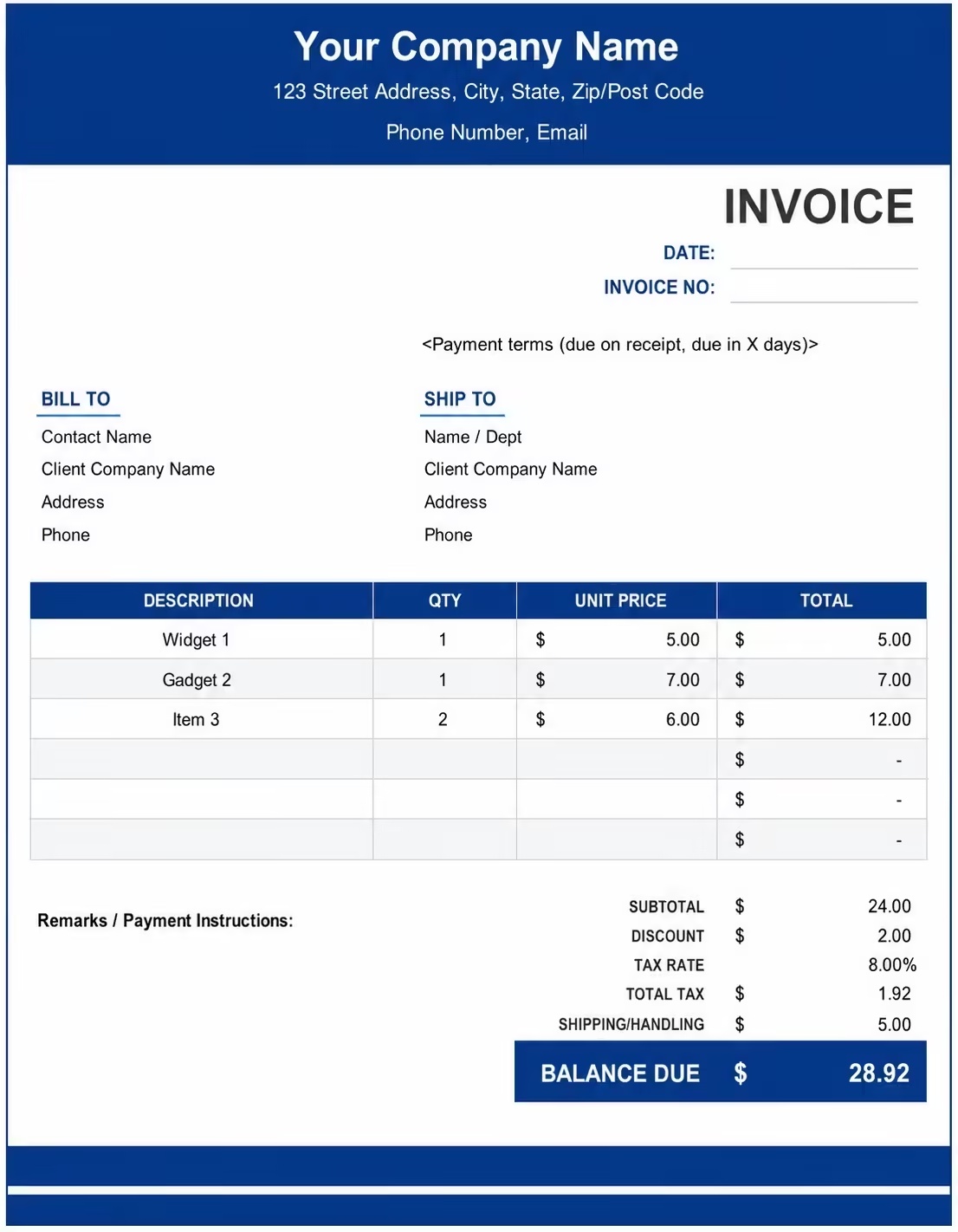
Printable Trucking Invoice Template
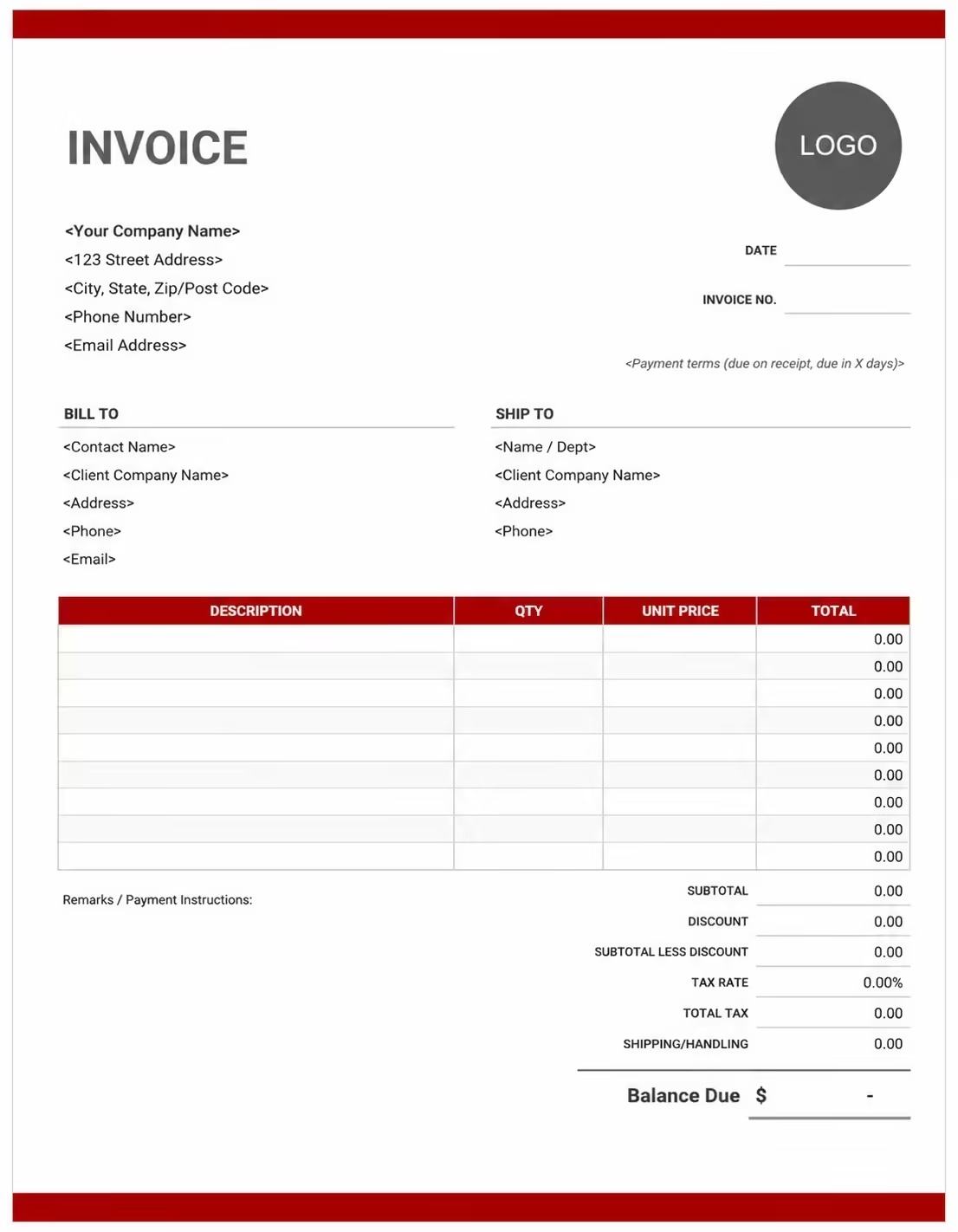
Free Trucking Invoice Template
Use these templates for trucking companies, owner-operators, freight haulers, independent drivers, local delivery fleets, logistics providers, transport businesses, and commercial hauling services that need clean billing for mileage, fuel, loading, unloading, permits, tolls, and freight charges.
How to Invoice for Trucking Work
A good trucking invoice should clearly show the shipment details, pickup and delivery locations, mileage, freight charges, fuel fees, extra costs, taxes, and payment terms.
Download Free TemplateIn 5 Steps:
- Confirm the customer details, pickup address, delivery address, load type, shipment weight, truck or trailer details, delivery schedule, and agreed pricing before starting the haul.
- Record completed trucking work such as freight hauling, local delivery, long-distance transport, loading, unloading, waiting time, route mileage, and any approved extra services.
- Track trucking costs such as mileage, fuel surcharge, tolls, permits, detention time, driver labor, loading assistance, unloading assistance, parking, and special handling fees.
- Calculate freight charges, mileage fees, fuel charges, labor, accessorial fees, tolls, permits, taxes, discounts, deposits, previous payments, and the final balance due.
- Send the invoice with payment options, due date, bill of lading or reference number, load notes, delivery confirmation details, and any follow-up service notes.
With Invoize, you can create trucking invoices faster, save customer and route details, reuse common hauling charges, add mileage and fuel fees, and track payments from your phone.
What to Include in a Trucking Invoice
A professional trucking invoice should include the details needed to identify the client, shipment, route, service, charges, and payment terms.
Invoice and Shipment Details
- Invoice numberHelps track the invoice, payment record, shipment history, and accounting reference.
- Client name and contact detailsShows who requested the trucking service and who is responsible for payment.
- Business, driver, and truck detailsShows which trucking company, owner-operator, driver, truck, or transport business completed the job.
- Shipment or load referenceAdds the bill of lading number, load number, purchase order, dispatch number, or delivery reference when available.
- Service date or billing periodShows when the pickup, route, delivery, or recurring transport service was completed.
Route and Freight Details
- Pickup and delivery locationsShows the route, origin, destination, and service locations for the freight haul or delivery.
- Load descriptionExplains the freight type, cargo, weight, quantity, pallets, containers, trailer type, or handling requirements.
- Mileage or distanceShows whether the job was billed by mile, kilometer, flat route rate, or agreed freight price.
- Freight hauling or delivery feeLists the base trucking charge, route rate, per-mile charge, or delivery service fee.
- Fuel surcharge and accessorial chargesShows fuel fees, loading, unloading, detention, layover, permits, tolls, parking, or special handling charges.
Payment and Final Notes
- Discounts, deposits, or previous paymentsShows credits or amounts already paid before the final balance.
- Taxes or additional feesShows applicable taxes, route fees, administrative charges, or other billing additions.
- Total amount dueShows the final amount the client needs to pay.
- Payment due date and methodsTells the client when payment is expected and how they can pay.
- Delivery or load notesRecords delivery confirmation, delay notes, damage notes, waiting time, route notes, or customer instructions.
Billing Scenarios for Trucking Businesses
Use clear invoice labels so clients understand the type of trucking service, route cost, extra fees, and final amount due.
| Scenario | Invoice line items | Best used for | How to describe it |
|---|---|---|---|
| Freight hauling | Base freight charge, mileage, fuel surcharge, load reference, delivery fee | Regional freight, long-haul transport, commercial loads, warehouse deliveries, and scheduled trucking jobs. | Show the pickup and delivery locations, load details, mileage, freight rate, and final delivery notes clearly. |
| Local delivery route | Route fee, stop fee, mileage, driver labor, fuel, delivery confirmation | Local trucking, city deliveries, multi-stop routes, business deliveries, and courier-style truck delivery. | List each stop or route area when useful and show any mileage, waiting time, or handling fees. |
| Owner-operator invoice | Hauling service, load number, mileage, fuel, tolls, permits, detention, payment terms | Independent truck drivers and owner-operators billing brokers, shippers, or direct customers. | Add load references, pickup and delivery dates, route details, rate, and accessorial charges. |
| Loading and unloading service | Driver labor, loading assistance, unloading assistance, pallet handling, waiting time | Freight that requires driver assist, hand unloading, pallet handling, dock delays, or extra site labor. | Separate loading, unloading, waiting, and handling charges from the base freight rate. |
| Fuel surcharge billing | Fuel surcharge, mileage, route distance, base freight charge, tolls | Long-distance hauls, changing fuel costs, broker loads, and routes where fuel is charged separately. | Show the surcharge as a separate line so the customer can see it apart from freight and labor. |
| Detention or waiting time | Detention hours, hourly rate, layover fee, driver time, route notes | Delayed loading, delayed unloading, missed dock appointments, warehouse waits, and overnight layovers. | Show waiting time, start and end notes if needed, hourly rate, and total detention or layover charge. |
Create Invoice Now
☝️ Create a professional invoice in seconds.
Common Charges and Fees for Trucking Businesses
Itemize trucking charges clearly so clients can see mileage, freight, fuel, loading, unloading, tolls, permits, taxes, and any extra costs.
| Charge or service | Unit | When to use | How to show it |
|---|---|---|---|
| Freight hauling charge | Load, route, or trip | Use for the main trucking service, cargo haul, freight delivery, or transport job. | Show the load, route, pickup and delivery points, and agreed freight rate clearly. |
| Mileage charge | Mile or kilometer | Use when charging by distance for local, regional, or long-distance trucking work. | Show total mileage multiplied by the per-mile rate. |
| Flat route fee | Fixed price | Use when the trucking job has one agreed route price instead of mileage billing. | List the route or delivery service and fixed amount clearly. |
| Fuel surcharge | Percentage or amount | Use when fuel is charged separately from the base freight or delivery fee. | Show fuel as a separate line item so the client can see how it affects the total. |
| Driver labor | Time | Use for loading help, unloading help, waiting time, route labor, paperwork, or extra service time. | Show labor hours multiplied by the hourly rate with a short description. |
| Loading or unloading fee | Service, hour, or stop | Use when the driver or crew helps load, unload, handle pallets, move freight, or complete site handling tasks. | List loading and unloading separately from the main freight charge. |
| Detention or waiting time | Hour or fee | Use for dock delays, late loading, late unloading, or customer-caused waiting time. | Show the waiting period and rate clearly when possible. |
| Tolls, permits, and parking | Fee or reimbursement | Use when route costs, road tolls, permits, parking, scale fees, or port fees are passed to the customer. | Show each fee clearly or group them under route expenses. |
| Layover or overnight fee | Fee or night | Use when the driver is delayed overnight or the route requires extended waiting beyond the agreed schedule. | Add a clear label so the customer understands why the fee applies. |
| Special handling fee | Fee or service | Use for oversized loads, fragile freight, temperature-sensitive cargo, hazardous material handling, or special equipment needs. | Describe the handling requirement and charge separately. |
| Tax | Percentage or amount | Use when tax applies to trucking services, accessorial fees, or other charges based on local rules. | Show tax before the final total so the client can see how the balance was calculated. |
| Deposit or previous payment | Credit | Use when the client paid before or during the trucking service. | Subtract it from the invoice total and show the remaining balance due. |
Common Trucking Invoicing Mistakes
Trucking work can include mileage, freight details, pickup and delivery locations, fuel costs, loading, unloading, waiting time, permits, tolls, and delivery documentation. Missing details can confuse clients or delay payment.
| Mistake | Why it causes problems | How to fix it |
|---|---|---|
| Not adding pickup and delivery locations | The client may not know which route, load, or delivery the invoice belongs to. | Add origin, destination, service address, route notes, or delivery reference to every trucking invoice. |
| Leaving out the load or shipment reference | The invoice may be hard to match with the correct dispatch, bill of lading, purchase order, or broker load. | Include the load number, BOL number, PO number, dispatch number, or customer reference when available. |
| Combining freight, fuel, and accessorial fees in one total | The customer cannot see the base hauling charge, fuel surcharge, and extra fees separately. | Separate freight, mileage, fuel, loading, unloading, detention, tolls, permits, and taxes into clear line items. |
| Not showing mileage clearly | The customer may question a distance-based charge if the miles or rate are missing. | Show total miles or kilometers and the per-mile or per-kilometer rate. |
| Forgetting fuel surcharges | Fuel costs may be missed or added unclearly, which can reduce profit or create billing disputes. | Add fuel surcharge as a separate line item when it applies. |
| Not recording waiting time or detention | Extra driver time may be questioned if dock delays or loading delays are not documented. | Add detention or waiting time with the time period, hourly rate, and short note. |
| Leaving out tolls, permits, or route expenses | Route costs may be forgotten or the final total may look higher than expected. | List tolls, permits, parking, scale fees, port fees, or other route expenses clearly. |
| Forgetting deposits or previous payments | The final balance may look higher than expected. | Show deposits, partial payments, or credits before the balance due. |
| Not adding delivery notes | The customer may not have proof of completion or understand delay, damage, or special handling details. | Add delivery confirmation, route notes, cargo notes, delay notes, or customer instructions. |
| Not keeping invoice records | Tracking shipments, route costs, payments, load references, and customer history becomes harder. | Keep a copy of every trucking invoice for your business records. |
More Invoice Templates You May Like
Explore closely related invoice templates for trucking work, similar services, and nearby billing scenarios before choosing the best format for your customer.
Questions
Frequently Asked Questions
What should a trucking invoice include?
A trucking invoice should include business details, client details, invoice number, shipment reference, pickup location, delivery location, service date, load details, mileage, freight charges, fuel surcharge, accessorial fees, taxes, payment terms, and the final balance due.
How should I show mileage on a trucking invoice?
Show the total distance and rate clearly. For example, list 320 miles × $2.50 per mile = $800. If the job uses a flat route price, list the route and agreed fixed amount instead.
Should fuel surcharge be listed separately?
Yes. Listing the fuel surcharge separately helps the customer understand how the final trucking invoice total was calculated and keeps fuel costs separate from the base freight charge.
How do I invoice for loading or unloading time?
Add loading or unloading as a separate line item when it is charged outside the main freight rate. Include the service description, number of hours or stops, hourly rate if used, and total amount.
Can I charge for detention or waiting time?
Yes. If detention or waiting time is part of your agreement, list the delay period, hourly rate, and total detention charge. Add a short note explaining the loading, unloading, or dock delay.
Should tolls and permits be included on the invoice?
Yes. Tolls, permits, scale fees, parking, port fees, and route-related expenses should be shown clearly when they are passed on to the customer.
How do I invoice as an owner-operator?
Owner-operators can invoice by listing the customer or broker, load number, pickup and delivery locations, mileage, freight rate, fuel surcharge, accessorial charges, due date, and payment method.
Can this trucking invoice template be used for local delivery and freight hauling?
Yes. You can use it for local deliveries, long-distance trucking, freight hauling, owner-operator billing, logistics work, multi-stop routes, and transport services by editing the line items.
What payment terms should a trucking invoice include?
Include the due date, accepted payment methods, late payment terms if applicable, load or BOL reference, customer instructions, and any notes about fuel, accessorial charges, detention, or route expenses.