
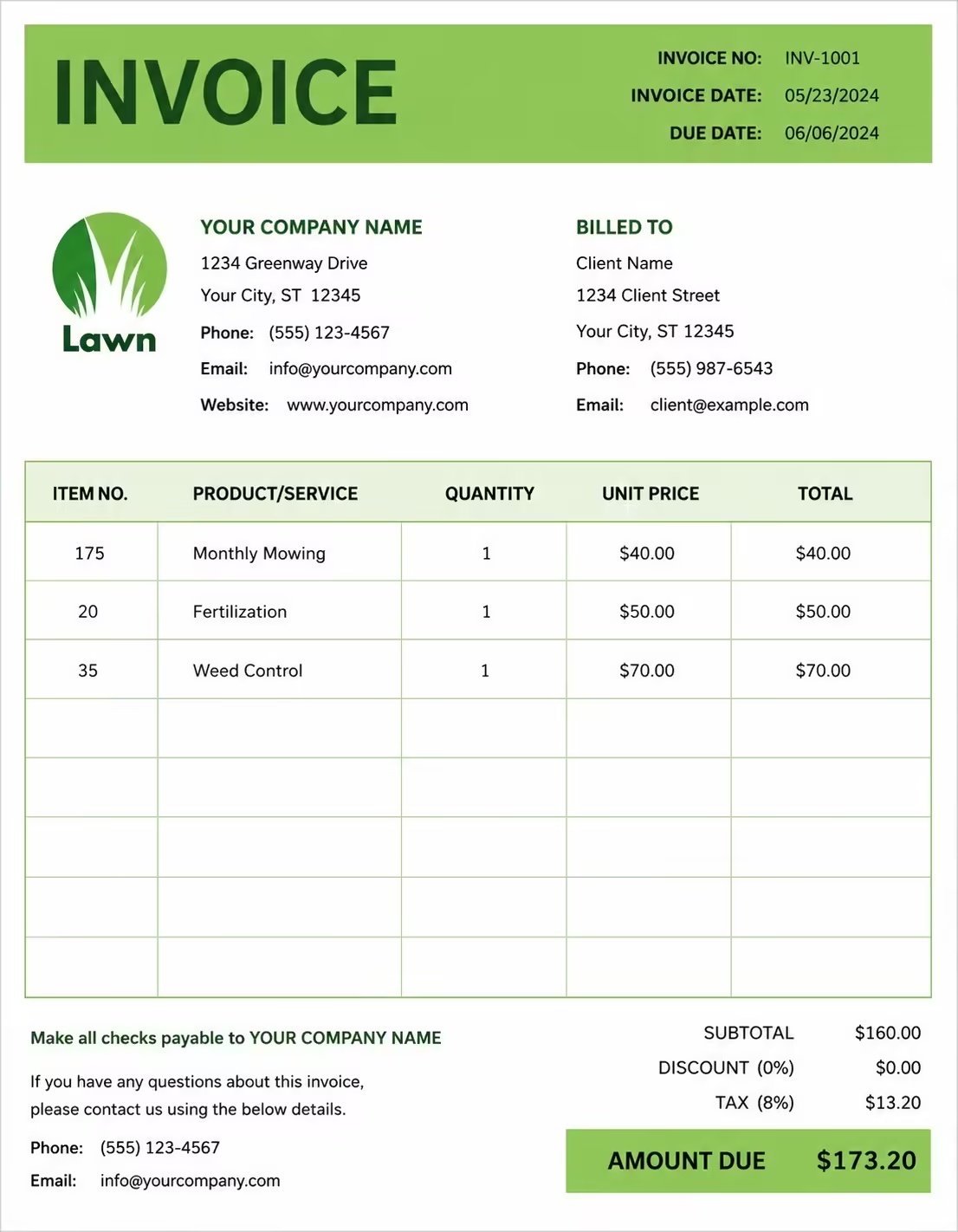
Free Cargo Invoice Template
Free invoice templates for cargo companies, freight businesses, shipping providers, logistics companies, transport services, exporters, importers, courier businesses, and cargo handling providers. Download and edit in PDF, Word, Excel, Google Docs, or Google Sheets.
Use this template to bill for cargo transport, freight handling, shipment delivery, customs support, storage, packaging, insurance, loading, taxes, discounts, deposits, and payment terms in a clear and professional way.
Download the app and manage invoices anywhere


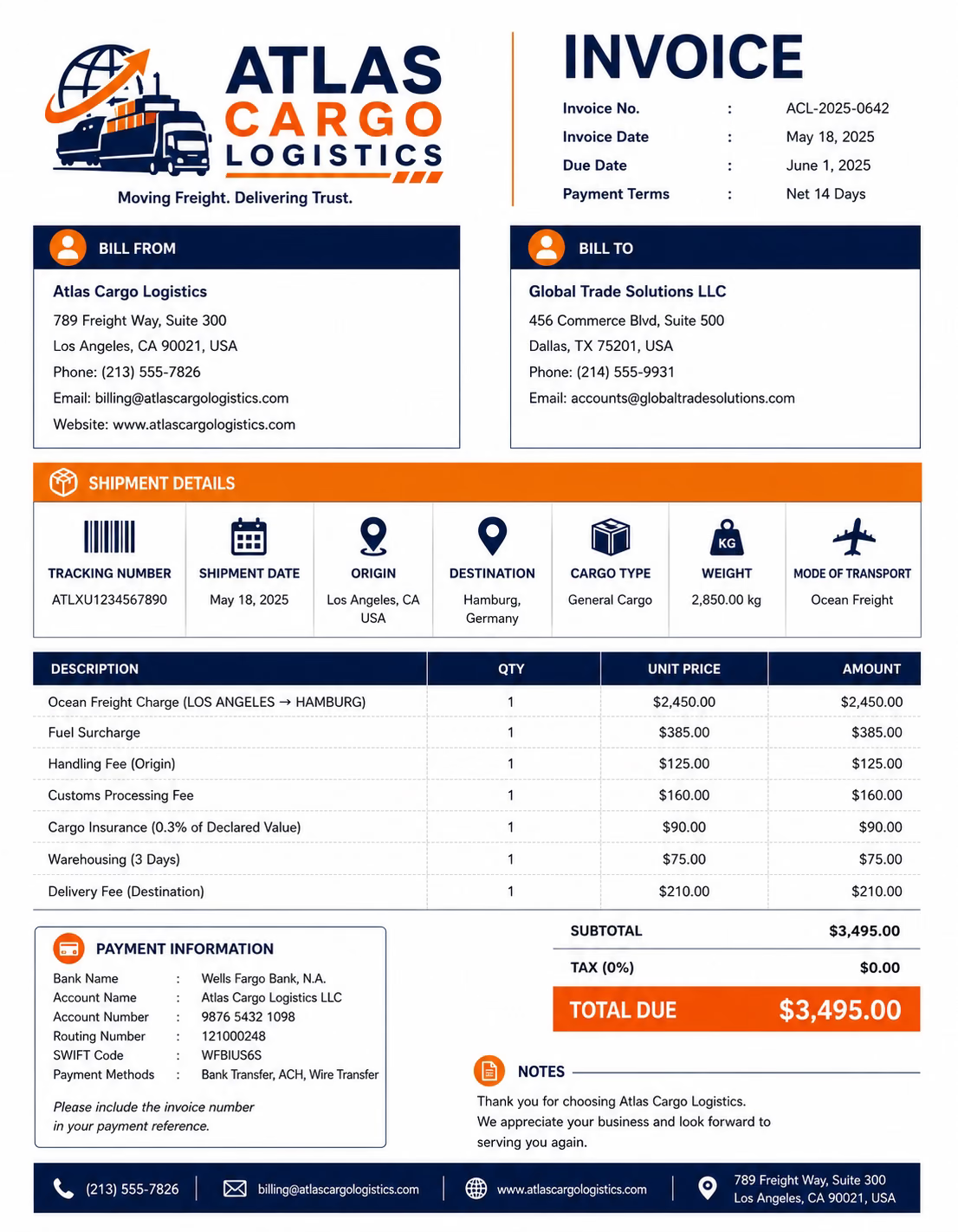
Download Free Cargo Invoice Templates
Download a template, then edit it in PDF, Word, Excel, Google Docs, or Google Sheets. Print it, save it, or send it to your client, shipper, consignee, importer, exporter, business, freight forwarder, or organization when the cargo service is complete or when a billing period ends.
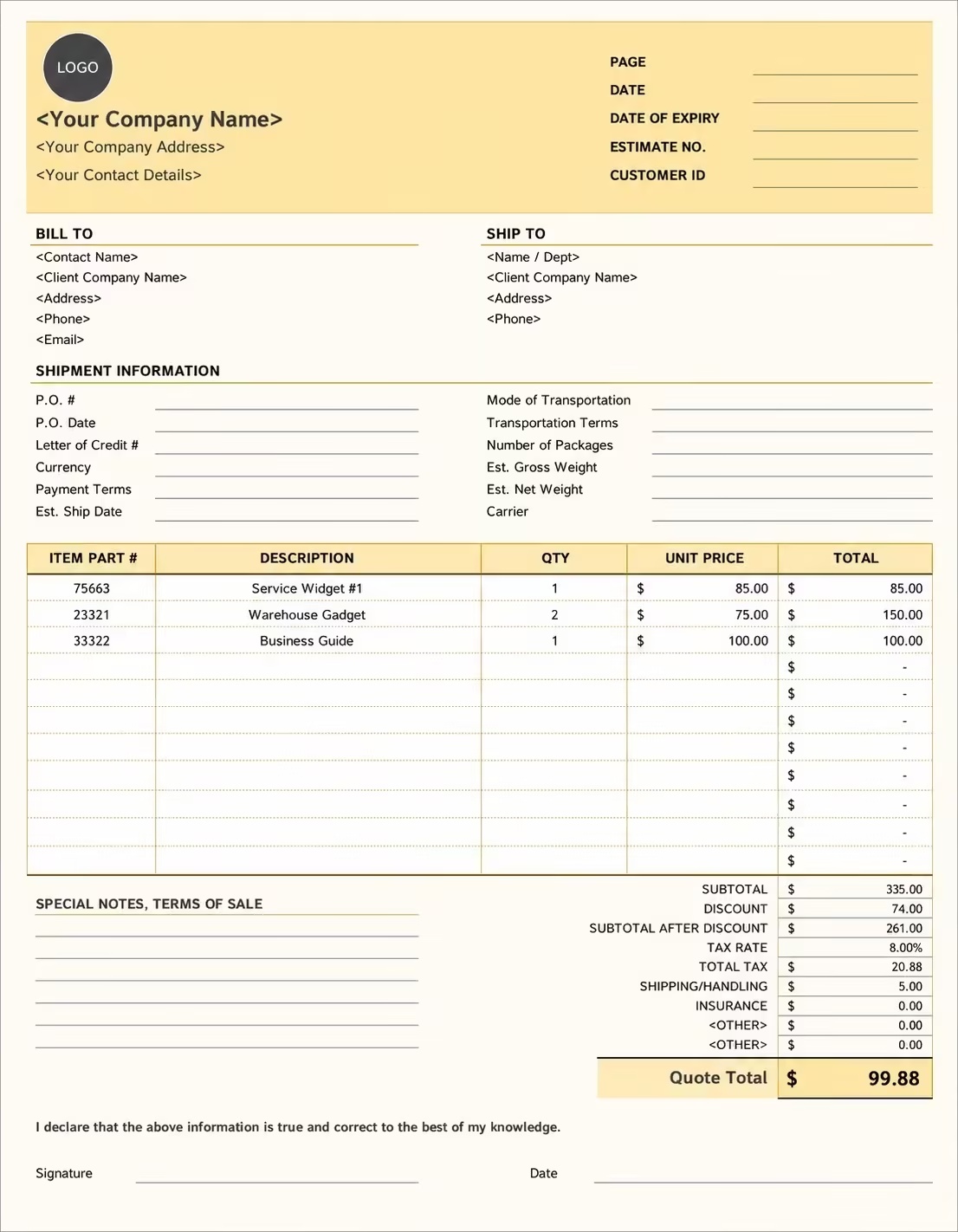
Editable Cargo Invoice Template
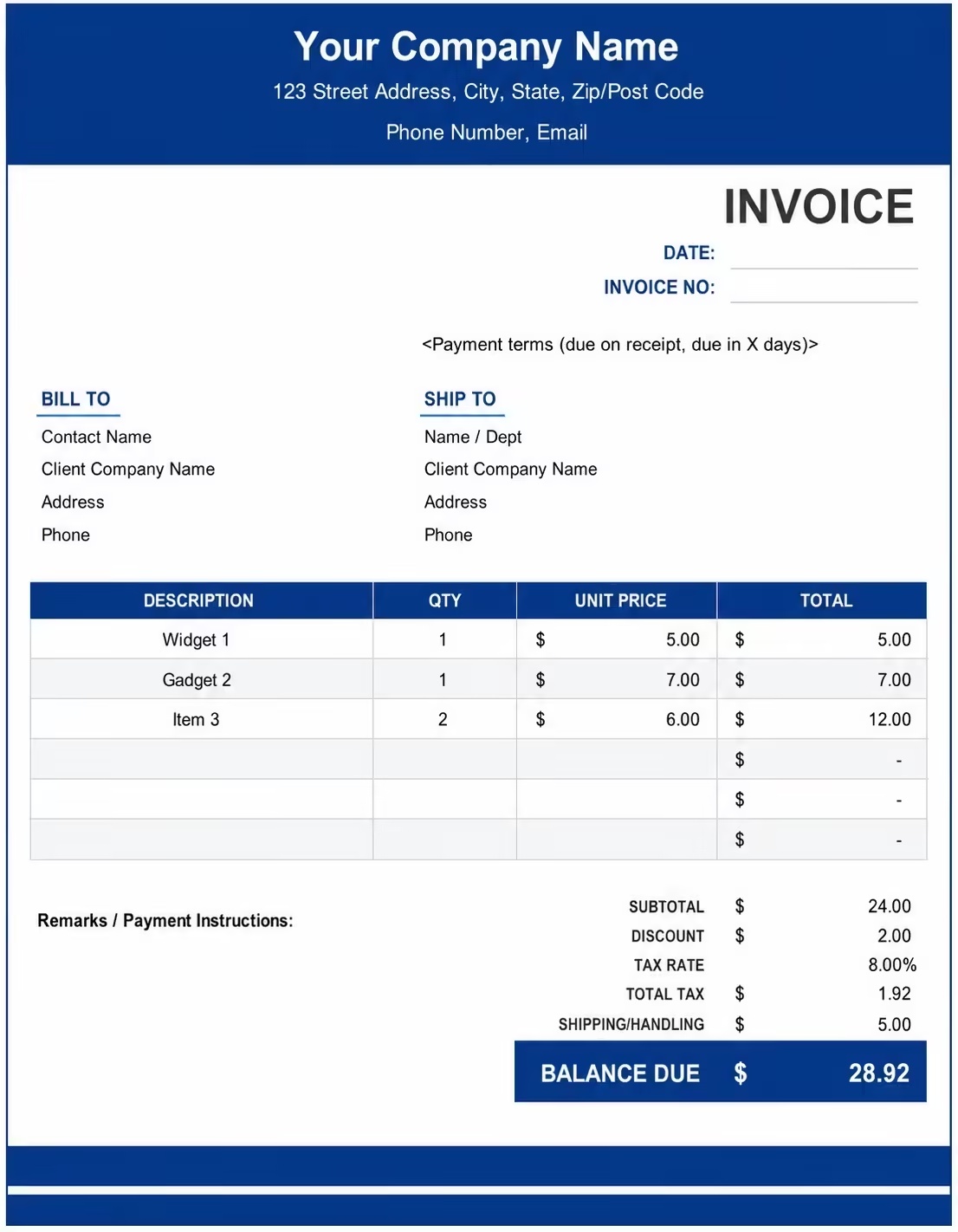
Printable Cargo Invoice Template
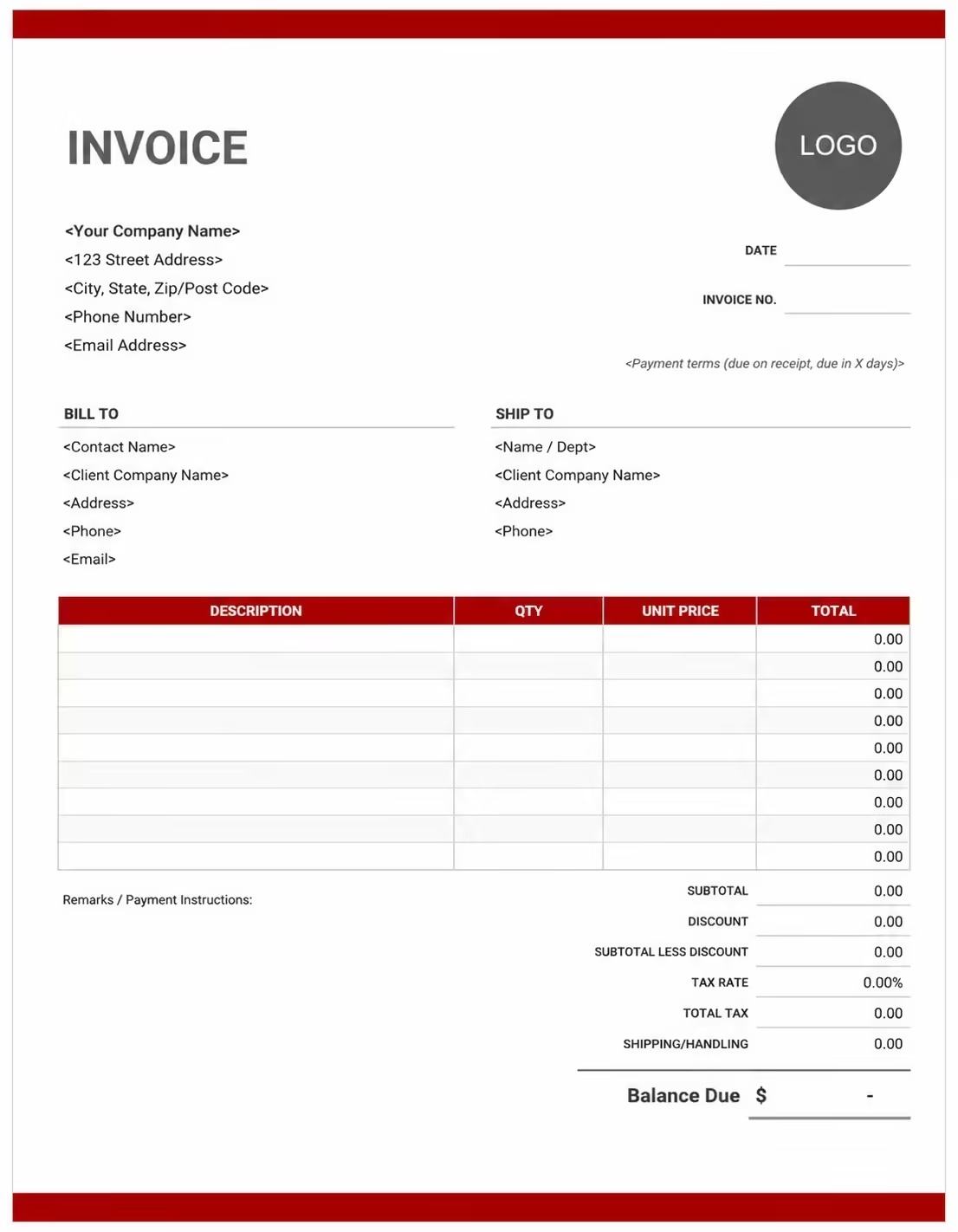
Free Cargo Invoice Template
Use these templates for cargo companies, freight carriers, logistics providers, shipping businesses, courier services, import and export companies, warehouse teams, freight forwarders, and transport service providers.
How to Invoice for Cargo Services
A good cargo invoice should clearly show the client details, shipment reference, cargo description, origin and destination, weight, volume, freight charges, handling fees, deposits, taxes, and payment terms.
Download Free TemplateIn 5 Steps:
- Confirm the client details, cargo description, shipment reference, pickup location, delivery destination, weight, volume, transport method, and agreed pricing before preparing the invoice.
- Record completed cargo work, freight transport, loading, unloading, packaging, handling, storage, customs support, delivery, and any approved extra services.
- Track cargo-related costs such as fuel, freight handling, packaging, warehouse storage, labor, customs support, insurance, delivery, documentation, and admin work.
- Calculate cargo transport fees, weight-based charges, handling fees, storage costs, insurance, delivery charges, discounts, deposits, taxes if applicable, and the final balance due.
- Send the invoice with payment options, due date, shipment notes, cargo details, delivery instructions, and any remaining balance instructions.
With Invoize, you can create cargo invoices faster, save client details, reuse common cargo service items, add freight charges and handling fees, and track payments from your phone.
What to Include in a Cargo Invoice
A professional cargo invoice should include the details needed to identify the client, cargo provider, shipment, cargo items, transport charges, and payment terms.
Invoice and Shipment Details
- Invoice numberHelps track the invoice, payment record, and cargo shipment history.
- Client, shipper, consignee, importer, or exporter detailsShows who requested the cargo service and who is responsible for payment.
- Cargo company, freight carrier, logistics provider, or courier detailsShows which cargo provider, shipping business, courier service, or transport company completed the shipment or transport service.
- Shipment number, tracking number, bill of lading, or airway billConnects the invoice to the correct cargo shipment, freight record, delivery order, order number, or cargo reference.
- Invoice date, pickup date, shipment date, delivery date, or arrival dateShows when the cargo was collected, shipped, delivered, arrived, billed, or covered by the billing period.
Cargo Details
- Pickup address, origin, destination, delivery address, or routeShows where the cargo moved from and where it was delivered, including port, airport, warehouse, or route details.
- Cargo description, product type, item category, or goods descriptionHelps identify the exact cargo, shipment contents, package type, or goods being transported or handled.
- Quantity, package count, carton count, pallet count, or container countShows how the cargo charge was calculated and helps verify the shipment by weight, volume, dimensions, or package count.
- Freight rate, weight rate, volume rate, container rate, or shipment feeShows the pricing method and agreed rate for the cargo transport service.
- Transport method, vehicle type, container type, or service levelShows whether the cargo moved by road, air, sea, rail, courier, or special service, and includes the line item total for each shipment line.
Payment and Final Notes
- Loading, handling, packaging, documentation, or warehouse feesLists approved costs outside the main cargo transport charge, including unloading, palletizing, labeling, or warehouse fees.
- Storage, insurance, customs, fuel surcharge, or special handlingShows added costs connected to cargo movement, protection, clearance, waiting time, delivery, or special handling.
- Discounts, deposits, advance payments, freight credits, or adjustmentsShows credits, adjustments, deposits, advance payments, discounts, or amounts already paid before the final balance.
- Subtotal, tax, and total amount dueShows the final amount the client, shipper, consignee, importer, exporter, or company needs to pay.
- Cargo notes or payment termsRecords the due date, payment methods, delivery terms, customs notes, storage terms, insurance notes, late fees, or balance instructions.
Billing Scenarios for Cargo Businesses
Use clear invoice labels so clients, shippers, consignees, importers, exporters, and companies understand the cargo service, shipment route, freight charge, handling fee, deposit, and final amount due.
| Scenario | Invoice line items | Best used for | How to describe it |
|---|---|---|---|
| Standard cargo transport | Cargo description, shipment route, weight, freight charge, delivery fee, balance due | General cargo movement, local freight, business shipments, supplier deliveries, and regular transport orders. | Show the shipment reference, pickup and delivery locations, cargo weight, transport method, and final charge clearly. |
| Air cargo shipment | Airway bill number, cargo weight, airport route, handling fee, freight charge | Urgent cargo, international air shipments, lightweight goods, export orders, and time-sensitive deliveries. | Show the airway bill number, airport details, cargo description, chargeable weight, and air freight fee. |
| Sea cargo or container shipment | Container number, bill of lading, port details, freight charge, documentation fee | Container shipping, import/export cargo, large commercial shipments, and overseas freight movement. | Show the container number, port of loading, port of discharge, shipping terms, and total container charge. |
| Warehouse and storage billing | Storage period, pallet count, warehouse handling, loading, balance due | Cargo stored before shipment, after arrival, during customs clearance, or before final delivery. | Show the storage dates, pallet or package count, warehouse location, handling work, and storage fee. |
| Customs support cargo invoice | Shipment reference, customs documentation, clearance support, inspection fee, delivery charge | Importers, exporters, customs brokers, freight forwarders, and shipments requiring paperwork support. | Show the customs reference, documents prepared, shipment details, clearance support, and added service fee. |
| Special handling cargo | Fragile cargo, oversized cargo, packing, insurance, special handling fee | Fragile goods, machinery, valuable cargo, oversized items, temperature-sensitive cargo, and protected shipments. | Show the special handling requirement, cargo condition, packaging details, insurance, and final service charge. |
Create Invoice Now
☝️ Create a professional invoice in seconds.
Common Charges and Fees for Cargo Services
Itemize cargo charges clearly so clients can see freight costs, handling fees, storage, insurance, delivery, customs support, taxes, and any extra costs.
| Charge or service | Unit | When to use | How to show it |
|---|---|---|---|
| Cargo transport fee | Shipment, route, vehicle, container, or order | Use when billing for moving cargo from one location to another. | Show the pickup location, destination, shipment reference, and transport fee clearly. |
| Weight-based freight charge | Kilogram, pound, ton, or chargeable weight | Use when cargo pricing is based on actual weight or chargeable weight. | Show the weight, rate, and total freight charge. |
| Volume or dimensional charge | Cubic meter, cubic foot, package, or shipment | Use when cargo pricing is based on volume, dimensions, space used, or bulky shipment size. | Show dimensions, volume, rate, and total volume-based charge. |
| Loading and unloading fee | Hour, labor, package, pallet, or shipment | Use when cargo requires manual labor, forklift support, warehouse loading, or unloading at delivery. | Show loading or unloading work separately from the freight charge. |
| Handling or packaging fee | Package, pallet, carton, container, or shipment | Use when packing, wrapping, labeling, palletizing, sorting, or preparing cargo for transport. | Show packaging or handling costs as separate invoice line items. |
| Storage or warehouse fee | Day, week, pallet, package, or space | Use when cargo is stored before transport, after arrival, during customs clearance, or before pickup. | Show the storage period, warehouse location, rate, and storage total. |
| Insurance fee | Shipment, cargo value, percentage, or policy | Use when cargo insurance is added to protect goods during transport. | Show the declared value, insurance amount, and insurance fee clearly. |
| Customs or documentation fee | Document, shipment, entry, or service | Use when preparing cargo paperwork, customs documents, export forms, delivery notes, or clearance support. | Show documentation or customs support separately from transport charges. |
| Fuel surcharge | Shipment, route, percentage, or fee | Use when fuel-related costs are added to the cargo transport or freight service. | Show the fuel surcharge as a separate line item before the final total. |
Common Cargo Invoicing Mistakes
Cargo billing can include shipment references, cargo descriptions, pickup and delivery locations, weight, volume, handling fees, storage, insurance, deposits, taxes, and payment terms. Missing details can confuse clients or delay payment. Avoid these common mistakes.
| Mistake | Why it causes problems | How to fix it |
|---|---|---|
| Not listing the shipment reference | The client may not know which cargo order, tracking number, bill of lading, delivery, or billing period the invoice covers. | Add the shipment number, tracking number, bill of lading, airway bill number, order number, or cargo reference clearly. |
| Not describing the cargo clearly | The client may not understand which goods, packages, pallets, cartons, containers, or items were transported. | Add cargo description, package count, item category, product type, weight, volume, dimensions, or goods description. |
| Combining all charges in one line | The total may look unclear because the client cannot see freight, handling, storage, insurance, deposits, and taxes separately. | Separate transport fees, weight charges, handling, storage, insurance, documentation, deposits, discounts, and taxes into clear line items. |
| Not showing pickup and delivery details | The invoice may be harder to match with route records, delivery notes, warehouse logs, or shipment updates. | Add pickup address, destination, route, delivery address, port, airport, warehouse, or service location clearly. |
| Not showing weight, volume, or package count | The client may question the charge if cargo size, weight, carton count, pallet count, or container count is not visible. | Show package count, weight, volume, dimensions, container count, pallet count, and pricing method clearly. |
| Forgetting handling or storage fees | Loading, unloading, warehouse storage, waiting time, or special handling may look unexpected if not listed. | Add loading, unloading, handling, warehouse storage, waiting time, and special handling as separate line items. |
| Leaving out insurance or customs notes | International or valuable cargo may be unclear if insurance, documentation, or customs support is not shown. | Add insurance details, declared value, customs support, documentation notes, and shipment terms when useful. |
| Forgetting deposits or previous payments | The final balance may look higher than expected. | Show deposits, advance payments, partial payments, freight credits, discounts, or previous payments before the balance due. |
| Leaving out payment or delivery terms | The client may not know when payment is due, how to pay, or how delivery, storage, and late fees are handled. | Add payment due date, payment methods, delivery terms, storage terms, late fees, customs notes, and balance instructions. |
More Invoice Templates You May Like
Explore closely related invoice templates for cargo work, similar services, and nearby billing scenarios before choosing the best format for your customer.
Questions
Frequently Asked Questions
How should I show cargo transport charges on an invoice?
List each cargo service with the shipment route, weight or volume, rate, and total amount. Example: “Cargo transport: Karachi to Dubai, 500 kg × $1.20/kg = $600.” This helps the client understand how the cargo charge was calculated.
What shipment details should be included on a cargo invoice?
Include the sender name, receiver name, pickup location, delivery location, shipment date, tracking number, cargo description, weight, volume, and invoice number. Example: “Shipment: 20 cartons of garments, Weight: 350 kg, Tracking #CG2048.” This connects the invoice to the correct cargo shipment.
How do I invoice for weight-based cargo charges?
Show the total weight, rate per kg, and final charge clearly. Example: “Air cargo: 250 kg × $2.50/kg = $625.” If volume-based pricing applies, show the cubic measurement and rate instead.
Should loading and unloading fees be listed separately?
Yes. Loading, unloading, warehouse handling, forklift use, or manual labor fees should be shown as separate line items. Example: “Loading service: $75” or “Warehouse handling: $120.” This keeps handling costs separate from freight charges.
Can I include packaging or pallet charges?
Yes. Packaging, cartons, pallets, wrapping, crates, or labeling charges should be listed separately if provided. Example: “Pallet wrapping: 10 pallets × $8 = $80” or “Wooden crate packing: $150.” This helps explain extra cargo preparation costs.
How should I show customs or documentation fees?
List customs support, export documents, import paperwork, certificate handling, or clearance assistance separately. Example: “Customs documentation support: $95” or “Export clearance handling: $140.” This keeps paperwork charges clear for international shipments.
How do I show deposits or partial payments?
Show the full cargo invoice total, payment already received, and remaining balance. Example: “Cargo shipment total: $1,200,” “Advance payment received: $400,” and “Balance due: $800.” This helps both the cargo company and client track payment clearly.
What payment terms should a cargo invoice include?
Include the due date, accepted payment methods, currency, shipment release terms, storage fee policy, and late payment rules. Example: “Payment due before cargo release. Extra weight, customs delays, storage charges, insurance, or route changes may require an updated invoice.”