
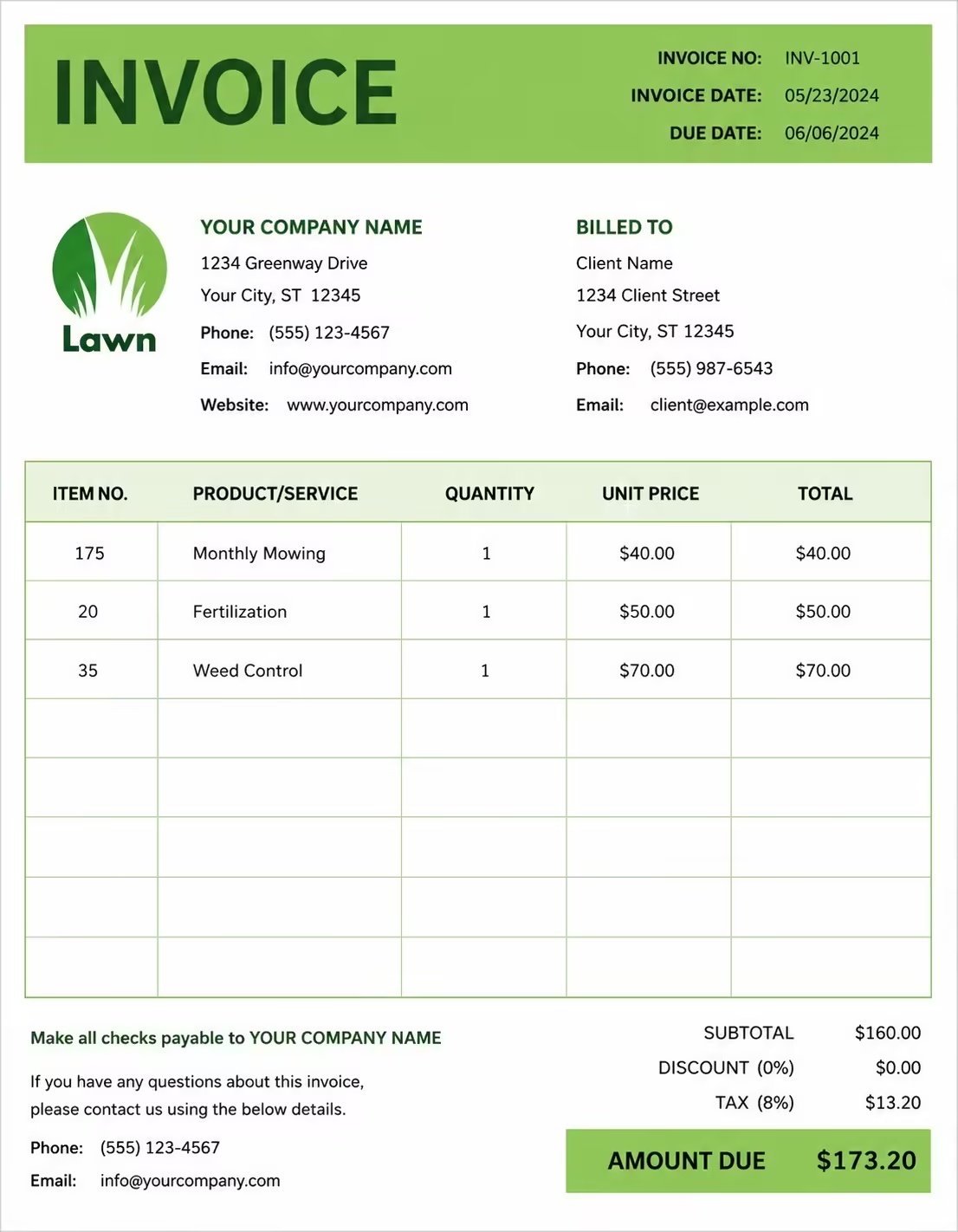
Free Commercial Invoice Template
Free invoice templates for commercial shipments, exporters, importers, manufacturers, wholesalers, online sellers, freight teams, customs paperwork, and international business transactions. Download and edit in PDF, Word, Excel, Google Docs, or Google Sheets.
Use this template to record exported goods, buyer and seller details, item descriptions, HS codes, country of origin, quantities, unit values, shipping terms, freight charges, taxes, duties, insurance, and total declared value in a clear and professional format.
Download the app and manage invoices anywhere


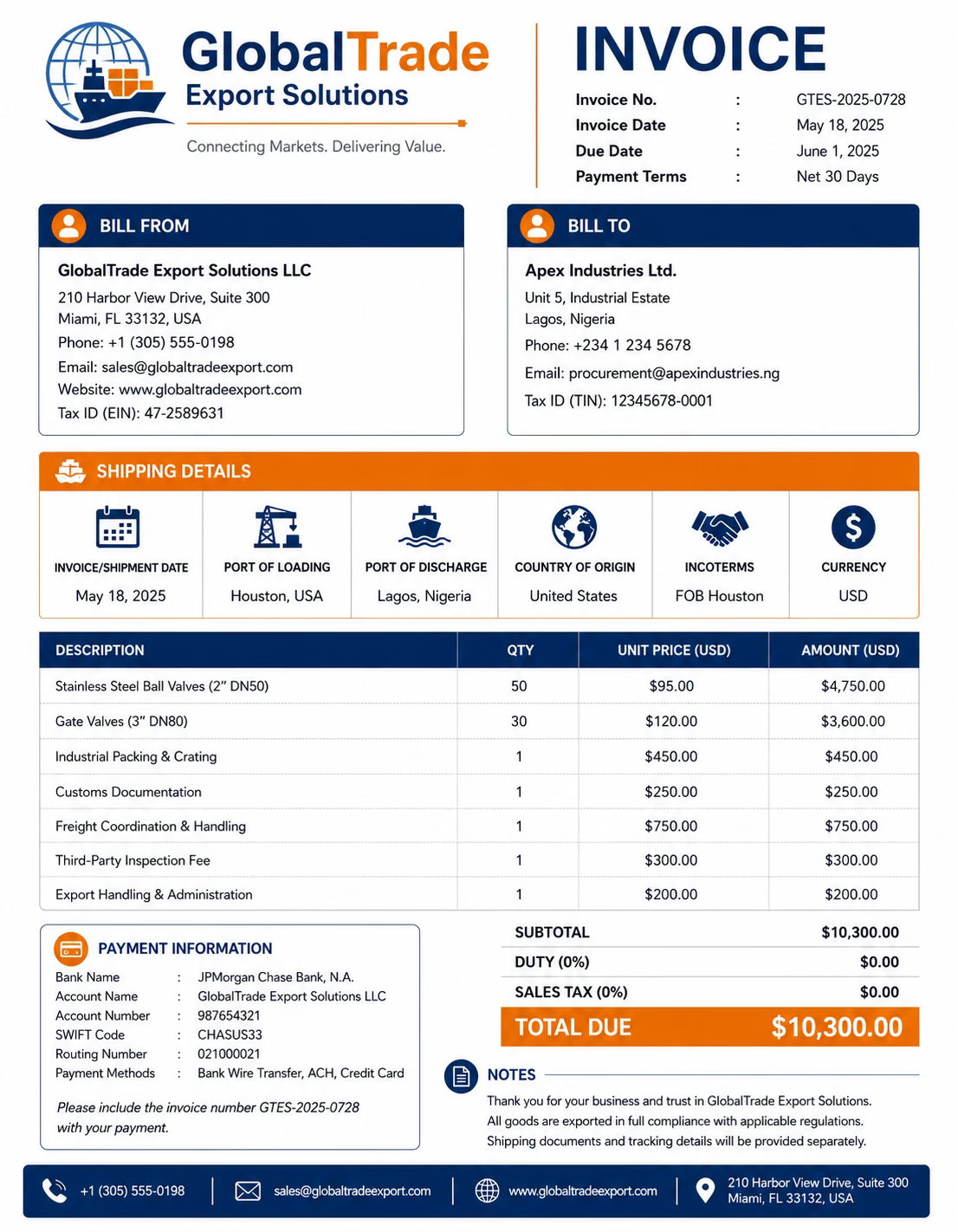
Download Free Commercial Invoice Templates
Download a template, then edit it in PDF, Word, Excel, Google Docs, or Google Sheets. Print it, save it, or send it to your customer, buyer, importer, freight forwarder, customs broker, shipping carrier, warehouse, or accounting team when goods are sold, shipped, exported, or cleared through customs.
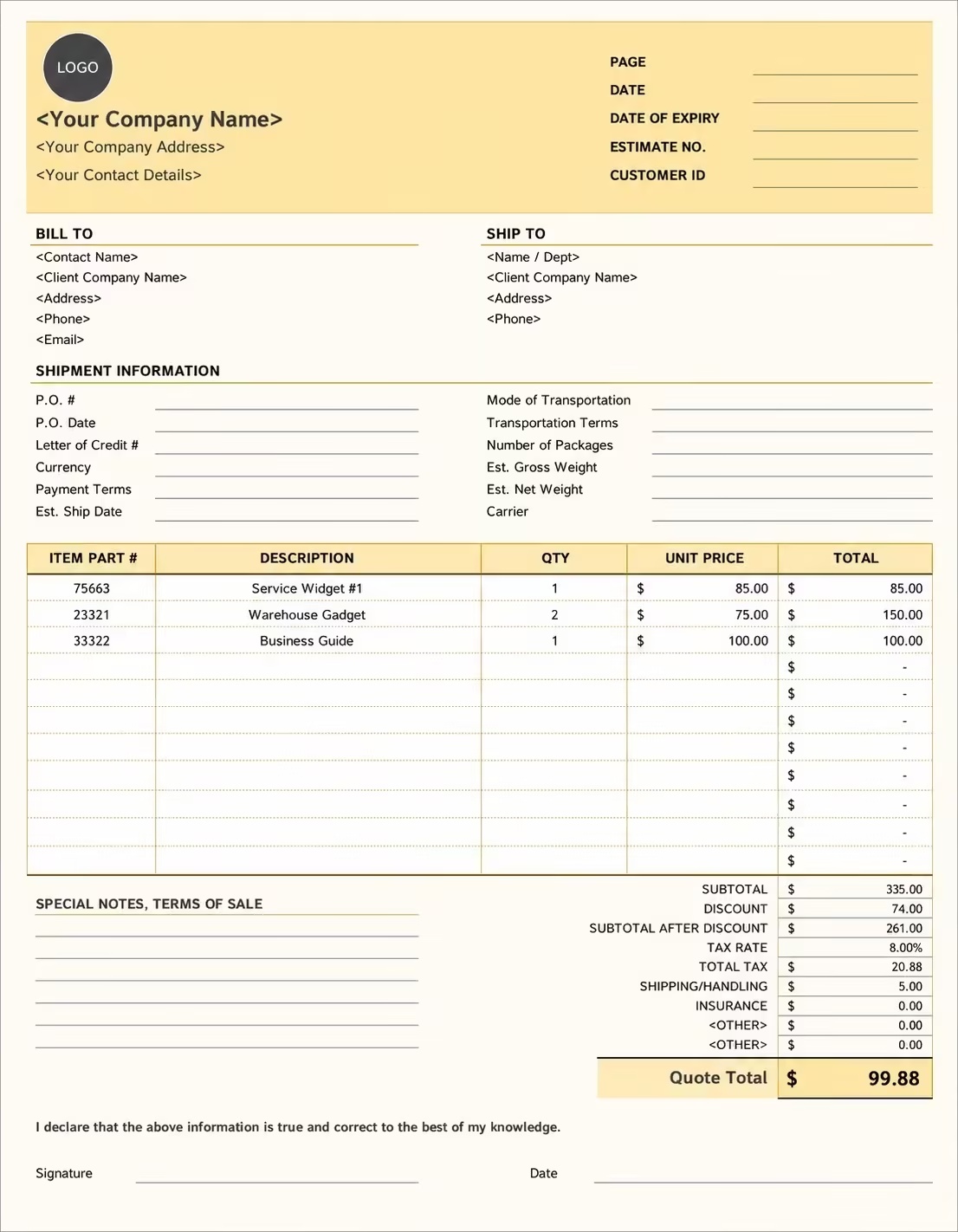
Editable Commercial Invoice Template
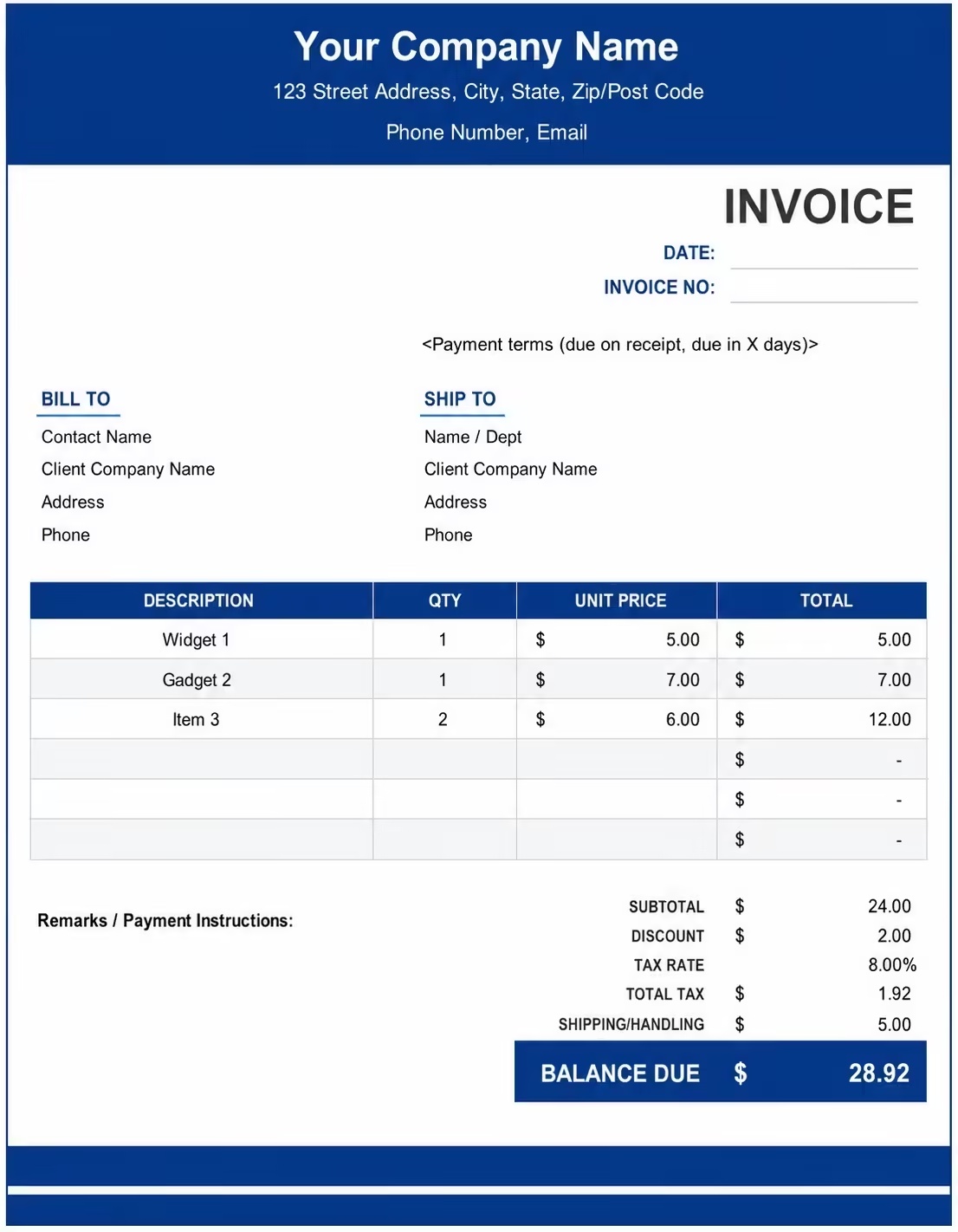
Printable Commercial Invoice Template
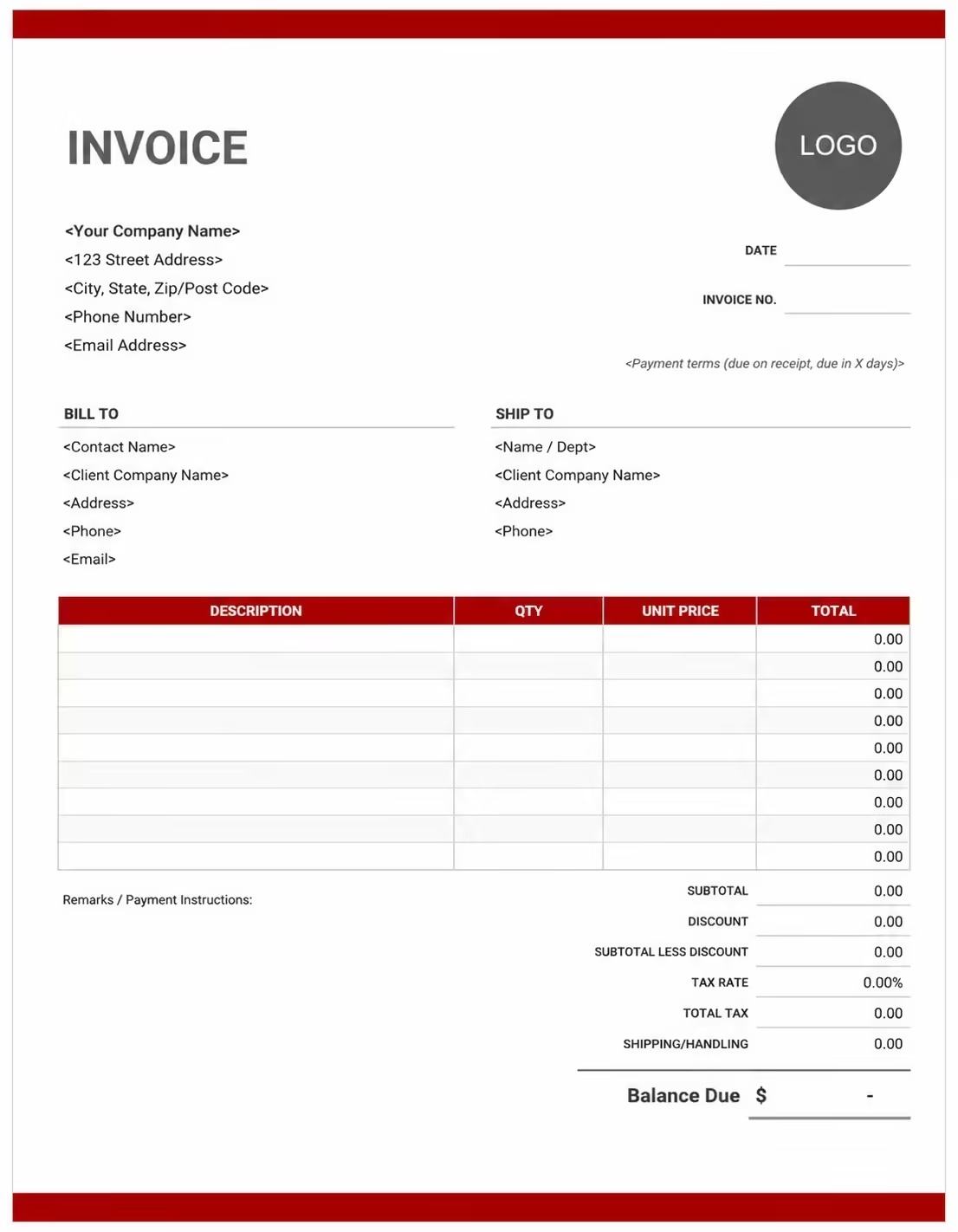
Free Commercial Invoice Template
Use these templates for exporters, importers, manufacturers, wholesalers, online sellers, international shipments, freight forwarding, commercial cargo, and customs documentation.
How to Invoice for Commercial Shipments
A commercial invoice should clearly show who sold the goods, who purchased them, what items are being shipped, the declared value, shipping terms, taxes, duties, freight details, and payment terms.
Download Free TemplateIn 5 Steps:
- Confirm the seller, buyer, consignee, shipping address, export reference, purchase order, delivery terms, shipment method, currency, and agreed pricing before preparing the invoice.
- Record each product with a clear description, SKU, HS code if applicable, country of origin, quantity, unit value, total value, weight, package count, and customs notes.
- Add commercial shipment costs such as freight, insurance, packing, handling, export documentation, customs broker fees, duties, taxes, and approved additional charges.
- Calculate subtotal, discounts, shipping charges, insurance, taxes, duties, deposits, previous payments, and the final total or declared commercial value.
- Send the invoice with payment instructions, incoterms, export or shipment notes, delivery details, customs information, due date, and any remaining balance instructions.
With Invoize, you can create commercial invoices faster, save buyer and seller details, reuse product lines, add shipping and tax details, and keep payment records organized from your phone.
What to Include in a Commercial Invoice
A professional commercial invoice should include the details needed to identify the seller, buyer, shipment, products, values, customs details, and payment terms.
Invoice and Party Details
- Invoice numberHelps track the commercial invoice, shipment record, payment history, and export documentation.
- Seller, exporter, manufacturer, supplier, or business detailsShows which company sold or supplied the goods and who issued the commercial invoice.
- Buyer, importer, consignee, customer, or company detailsShows who purchased the goods, receives the shipment, and is responsible for payment or customs clearance.
- Purchase order, sales order, proforma invoice, export reference, or shipment referenceConnects the invoice to the correct sale, order, shipment, customs entry, or account record.
- Invoice date, sale date, export date, shipment date, or delivery dateShows when the commercial transaction was billed, shipped, exported, delivered, or recorded.
Goods and Shipment Details
- Billing address, shipping address, consignee address, or delivery destinationShows where the goods are billed, shipped, delivered, imported, or cleared.
- Product description, SKU, model number, item code, or HS codeIdentifies each product clearly for the buyer, carrier, customs broker, and accounting records.
- Country of origin, manufacture country, or export countryHelps customs teams understand where the goods were produced, sourced, or exported from.
- Quantity, unit count, package count, carton count, weight, or volumeShows how the shipment total and declared value were calculated for each product line.
- Unit value, declared value, commercial value, or line totalShows the pricing method and total value for each product, package, carton, or shipment line.
Payment and Customs Notes
- Shipping method, incoterms, carrier, tracking number, or freight detailsRecords the delivery terms, movement method, carrier details, and shipment responsibility.
- Extra costs and feesLists freight, insurance, packaging, handling, export documentation, customs broker fees, storage, duties, or approved costs outside the item price.
- Discounts, deposits, advance payments, credits, or partial paymentsShows credits, advance payments, deposits, or amounts already paid before the final balance.
- Subtotal, tax, duties, insurance, freight, and total amount dueShows the final amount the buyer, importer, consignee, or customer needs to pay.
- Customs notes or payment termsRecords due date, payment methods, incoterms, customs declaration notes, export notes, late fees, or balance instructions.
Billing Scenarios for Commercial Invoices
Use clear invoice labels so buyers, importers, freight teams, customs brokers, carriers, and accounting teams understand the products, shipment value, freight charge, tax, duty, and final amount due.
| Scenario | Invoice line items | Best used for | How to describe it |
|---|---|---|---|
| International product sale | Product description, quantity, unit value, commercial value, tax, total amount | Exporters, importers, manufacturers, wholesalers, online sellers, and international business sales. | Show each item, product code, quantity, unit value, line total, and final amount clearly. |
| Export shipment | Seller, buyer, consignee, HS code, country of origin, declared value | Companies sending goods across borders for customs clearance and international delivery. | Include export references, product descriptions, HS codes, origin country, package details, and declared value. |
| Wholesale or bulk order | Cartons, cases, packs, lots, quantity, unit rate, shipping charge | Manufacturers, distributors, wholesalers, suppliers, and bulk buyers. | Show pack count, carton count, item quantity, wholesale rate, freight charge, and total order value. |
| Freight and insurance billing | Goods value, freight, insurance, handling, customs support | Shipments where transport, packing, insurance, or export support is billed with the goods. | Separate product value, freight charge, insurance cost, handling fee, and final invoice total. |
| Customs documentation invoice | Commercial value, HS codes, origin, incoterms, shipment details | Businesses that need clear documentation for customs brokers, import declarations, and border clearance. | Add customs-friendly product details, declared value, origin, incoterms, package details, and shipment references. |
| Replacement or sample shipment | Sample items, nominal value, reason for export, shipping cost | Businesses sending samples, replacement parts, warranty items, or low-value commercial goods. | State whether items are samples or replacements, show declared value, shipping cost, and explanatory notes. |
Create Invoice Now
☝️ Create a professional invoice in seconds.
Common Charges and Fees for Commercial Invoices
Itemize commercial invoice charges clearly so buyers and customs teams can see product values, shipping, insurance, handling, duties, taxes, and any extra costs.
| Charge or service | Unit | When to use | How to show it |
|---|---|---|---|
| Product or goods charge | Item, unit, carton, pack, lot, or shipment | Use when billing for products, materials, merchandise, parts, equipment, or exported goods. | Show product description, SKU or HS code, quantity, unit value, and line total. |
| Wholesale or bulk goods charge | Carton, case, pallet, bundle, lot, or order | Use when selling goods in bulk to importers, retailers, distributors, or resellers. | Show pack count, carton count, wholesale rate, quantity, and total commercial value. |
| Freight or shipping charge | Shipment, package, container, pallet, trip, or order | Use when the seller charges for transport, international freight, courier delivery, or cargo movement. | Show freight cost separately from product value and note the shipping method when useful. |
| Insurance charge | Shipment, declared value, order, or policy | Use when cargo insurance, shipment protection, or declared value coverage is billed separately. | Show the insured value, insurance fee, and shipment reference. |
| Packaging or handling fee | Package, carton, pallet, order, or shipment | Use when packing, labeling, palletizing, crate preparation, handling, or export-ready preparation is billed separately. | Separate packing and handling charges from item prices and freight. |
| Customs broker or documentation fee | Entry, document, shipment, or service | Use when export paperwork, customs support, commercial documentation, or broker admin work is billed. | Show the document type, service description, and fee separately. |
| Duties or taxes | Tax line, duty line, shipment, or order | Use when sales tax, VAT, import duty, export tax, or other tax-related charges must be shown. | Show tax rate, duty description, taxable amount, and total tax or duty amount when applicable. |
| Storage or warehousing fee | Day, pallet, carton, shipment, or location | Use when goods are stored before export, after arrival, or while awaiting pickup, clearance, or delivery. | Show storage dates, unit, quantity, and storage charge. |
| Discount or credit | Line item, order, shipment, or account credit | Use for promotional discounts, trade credits, agreed deductions, or previous overpayments. | Show discounts and credits as negative line items before the final balance. |
| Deposit or advance payment | Payment, percentage, order, or shipment | Use when the buyer paid a deposit or partial payment before shipment or delivery. | Show the deposit paid, payment date if useful, and remaining balance due. |
Common Commercial Invoice Mistakes to Avoid
Commercial invoices are often used for payment records and customs paperwork, so missing product, shipment, or value details can cause delays, disputes, or billing confusion.
| Mistake | Why it causes problems | How to fix it |
|---|---|---|
| Using vague product descriptions | Customs teams and buyers may not understand what goods are being shipped. | Use clear product names, SKUs, model numbers, material details, and item descriptions. |
| Forgetting HS codes or origin details | Customs clearance can be delayed when classification or origin information is missing. | Add HS codes, country of origin, manufacture country, or export country when required. |
| Combining all charges in one line | The buyer cannot see product value, freight, insurance, tax, duty, and handling charges separately. | Separate goods, freight, insurance, documentation, duties, taxes, deposits, and discounts into clear line items. |
| Not showing quantity or unit value | The declared total may be questioned if quantity, unit price, or package count is missing. | Show quantity, unit count, pack count, carton count, unit value, and line total clearly. |
| Leaving out buyer or consignee details | The invoice may not match the shipment, customs entry, or delivery record. | Add buyer, importer, consignee, billing address, shipping address, and contact details where useful. |
| Forgetting incoterms or shipping method | It may be unclear who is responsible for freight, insurance, duties, or delivery costs. | Add incoterms, carrier, tracking number, shipment method, and freight responsibility notes when applicable. |
| Using the wrong currency | International customers and customs teams may misunderstand the declared value. | Show the invoice currency clearly and use the agreed transaction currency. |
| Not recording deposits or advance payments | The final balance may look higher than expected. | Show deposits, partial payments, credits, or advance payments before the balance due. |
| Leaving out payment terms | The buyer may not know when payment is due or how to pay. | Add payment due date, bank details, payment methods, late fees, and balance instructions. |
| Not keeping invoice records | Export documentation, accounting, and customs records become harder to manage. | Keep a copy of every commercial invoice, shipment reference, and payment record for your business files. |
More Invoice Templates You May Like
Explore closely related invoice templates for commercial work, similar services, and nearby billing scenarios before choosing the best format for your customer.
Questions
Frequently Asked Questions
What is a commercial invoice used for?
A commercial invoice is used to record the sale and shipment of goods, especially for international trade. It usually includes seller details, buyer details, item descriptions, quantities, unit values, total value, shipping terms, and customs information.
What details should I include on a commercial invoice?
Include invoice number, seller and buyer details, consignee information, product descriptions, quantities, unit values, currency, country of origin, HS codes if required, freight and insurance charges, taxes, duties, payment terms, and shipment details.
Should I include HS codes on a commercial invoice?
If the invoice is used for customs clearance, HS codes are often helpful and may be required. Add the correct classification code for each product when available, along with a clear product description and country of origin.
How do I show freight and insurance on a commercial invoice?
List product values separately from freight, insurance, handling, and documentation fees. This makes the declared value easier to understand for the buyer, freight forwarder, customs broker, and accounting team.
Can I use this template for export shipments?
Yes. The template can be used for export shipments, international product sales, wholesale orders, samples, replacement goods, and commercial shipments that require clear buyer, seller, product, and value details.
Should a commercial invoice show currency?
Yes. Always show the invoice currency clearly, especially for international customers. Use the agreed transaction currency and make sure product values, freight charges, taxes, and totals use the same currency.
Can I include deposits or advance payments?
Yes. Show deposits, partial payments, advance payments, or credits as separate lines before the final balance due. This helps the buyer understand what has already been paid and what remains due.
Is a commercial invoice the same as a regular invoice?
A commercial invoice can include regular billing details, but it also includes trade and shipment details such as country of origin, HS codes, customs information, shipment references, freight charges, and declared value for goods.