
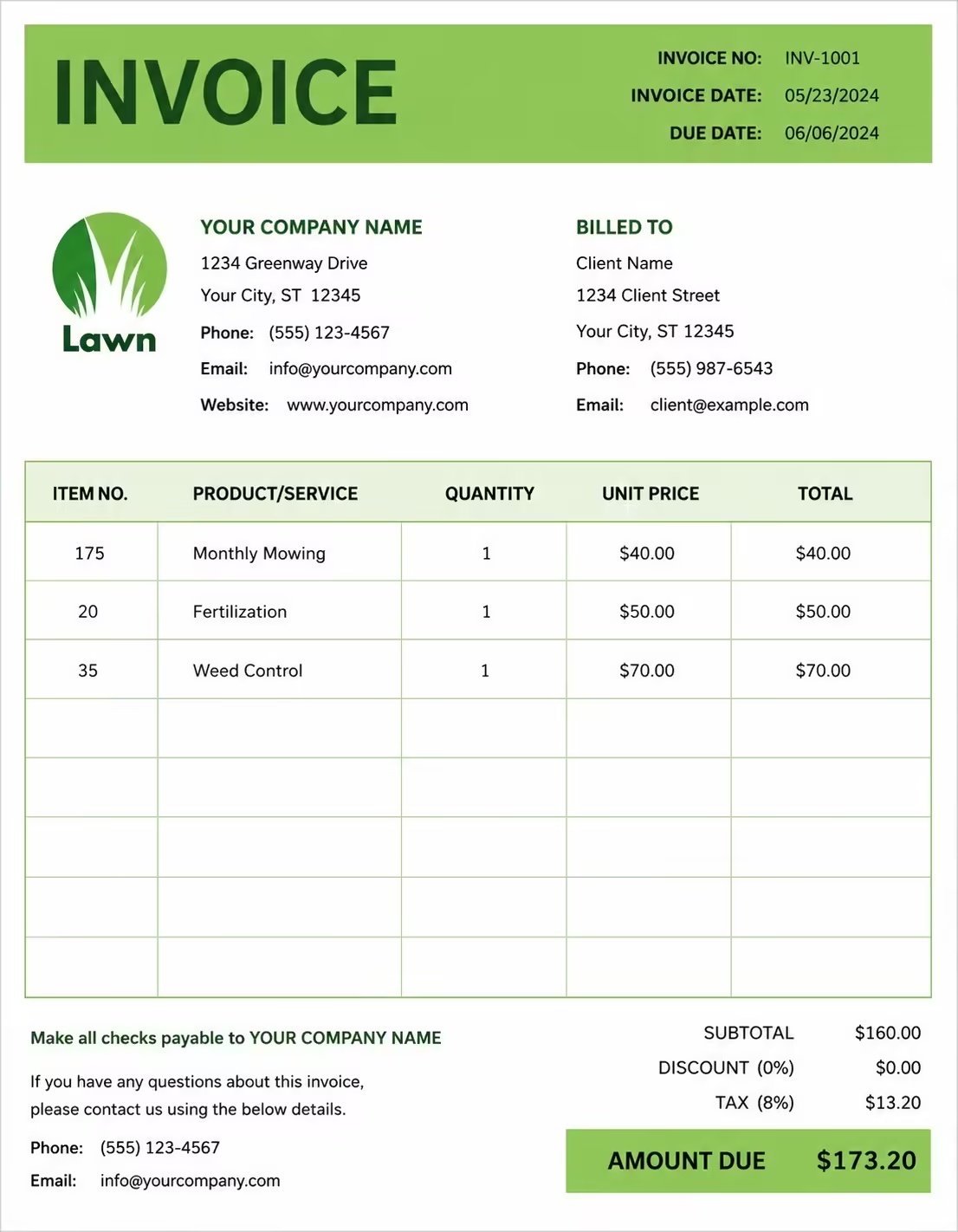
Free Finance Invoice Template
Free invoice templates for financial consultants, finance advisors, investment support teams, budgeting specialists, bookkeeping professionals, tax support providers, finance agencies, fractional CFOs, analysts, and professional service businesses. Download and edit in PDF, Word, Excel, Google Docs, or Google Sheets.
Use this finance invoice template to bill for financial planning, advisory sessions, budgeting work, bookkeeping support, cash flow analysis, forecasting, financial reports, compliance support, retainers, hourly consulting, taxes, discounts, deposits, and payment terms in a clear and professional way.
Download the app and manage invoices anywhere


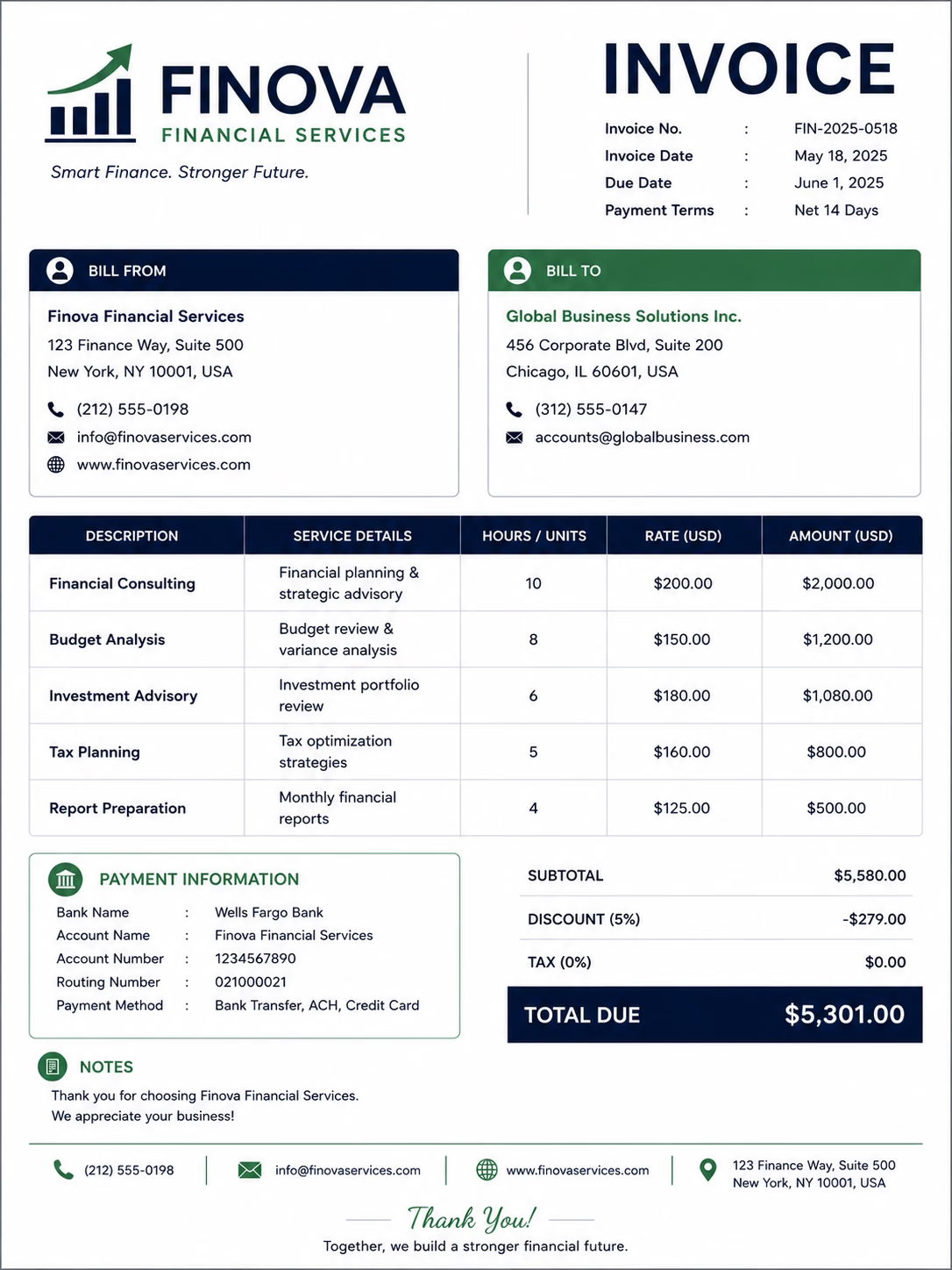
Download Free Finance Invoice Templates
Download a template, then edit it in PDF, Word, Excel, Google Docs, or Google Sheets. Print it, save it, or send it to your client after the finance consultation, reporting period, advisory project, bookkeeping cycle, or retainer month is complete.
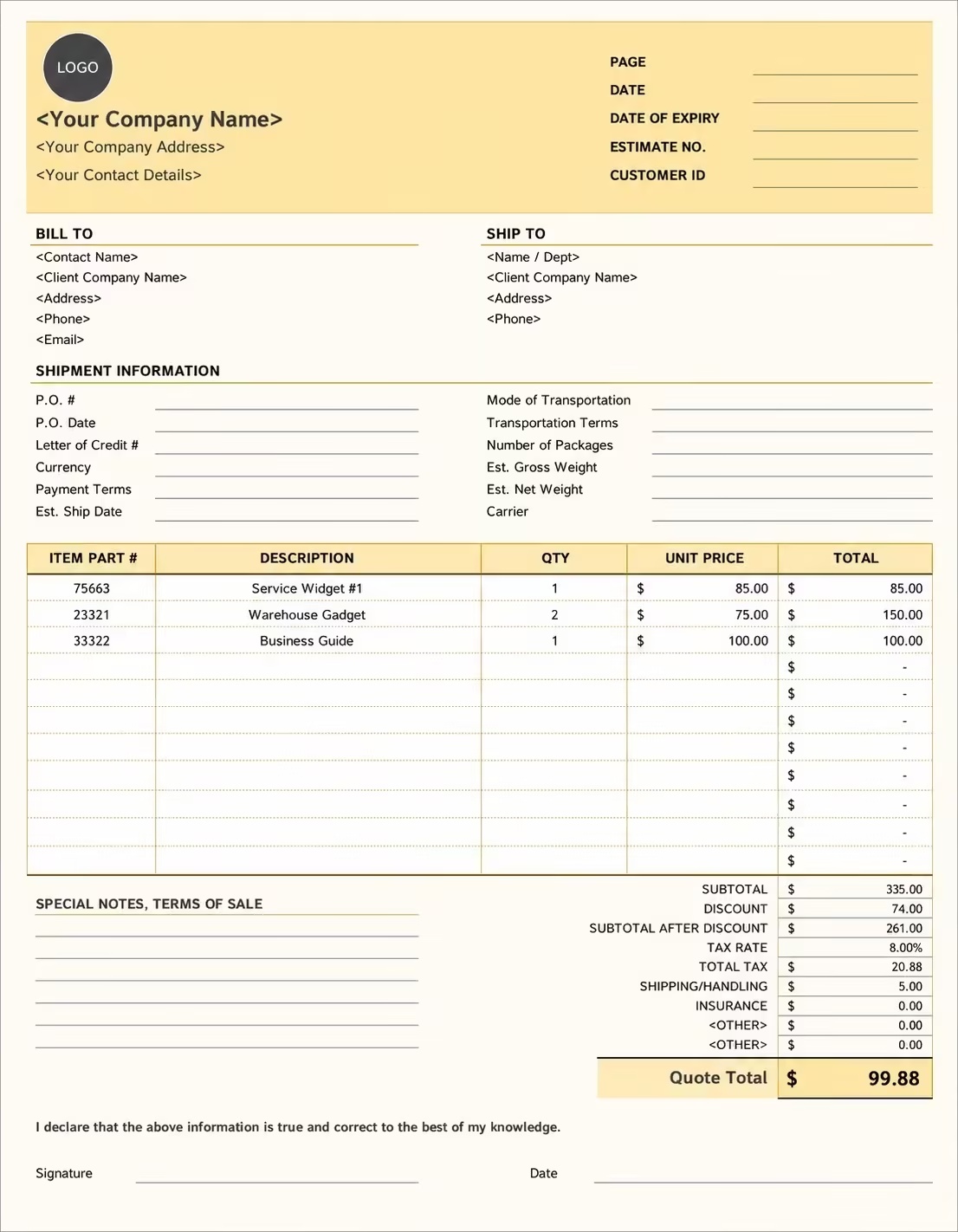
Editable Finance Invoice Template
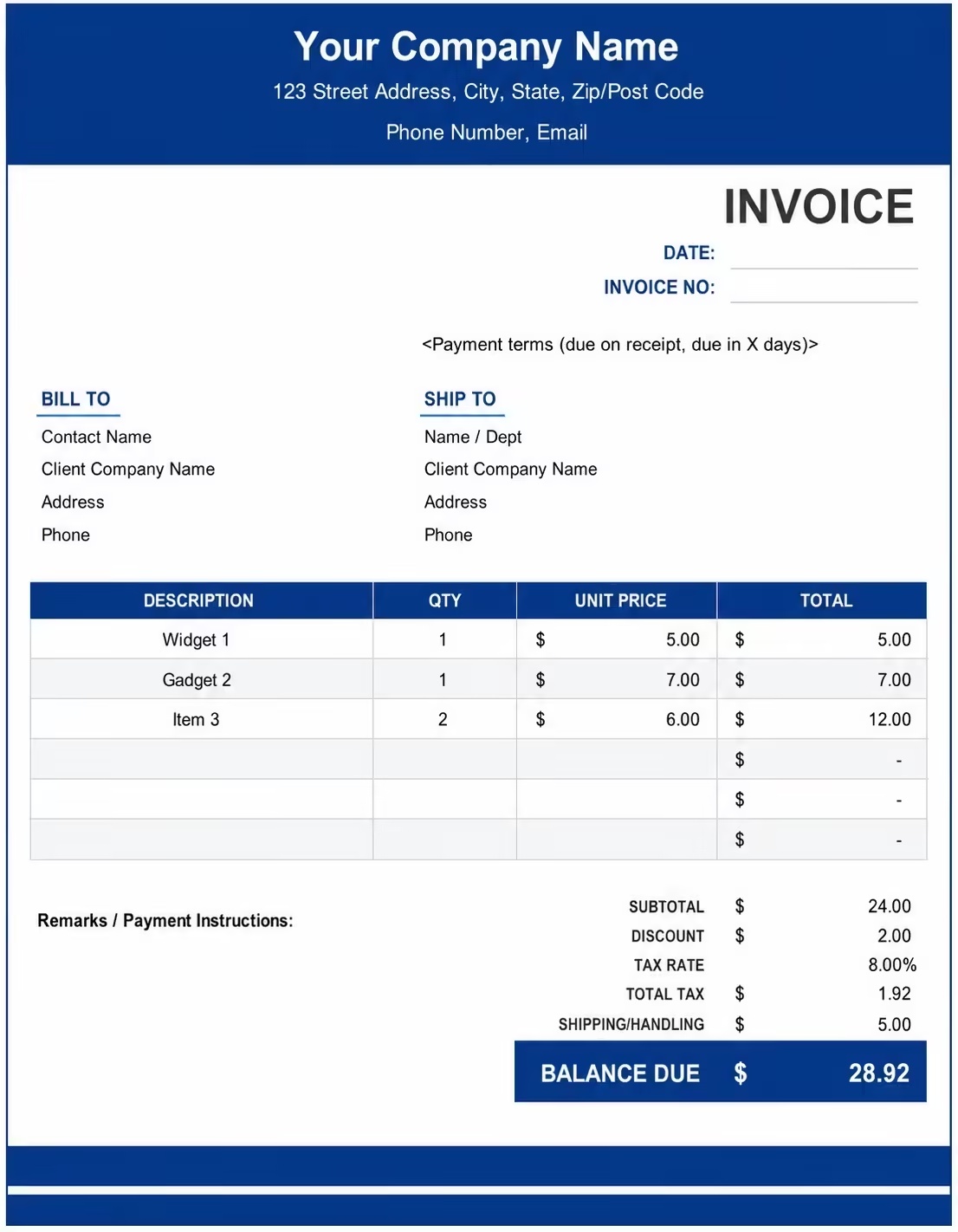
Printable Finance Invoice Template
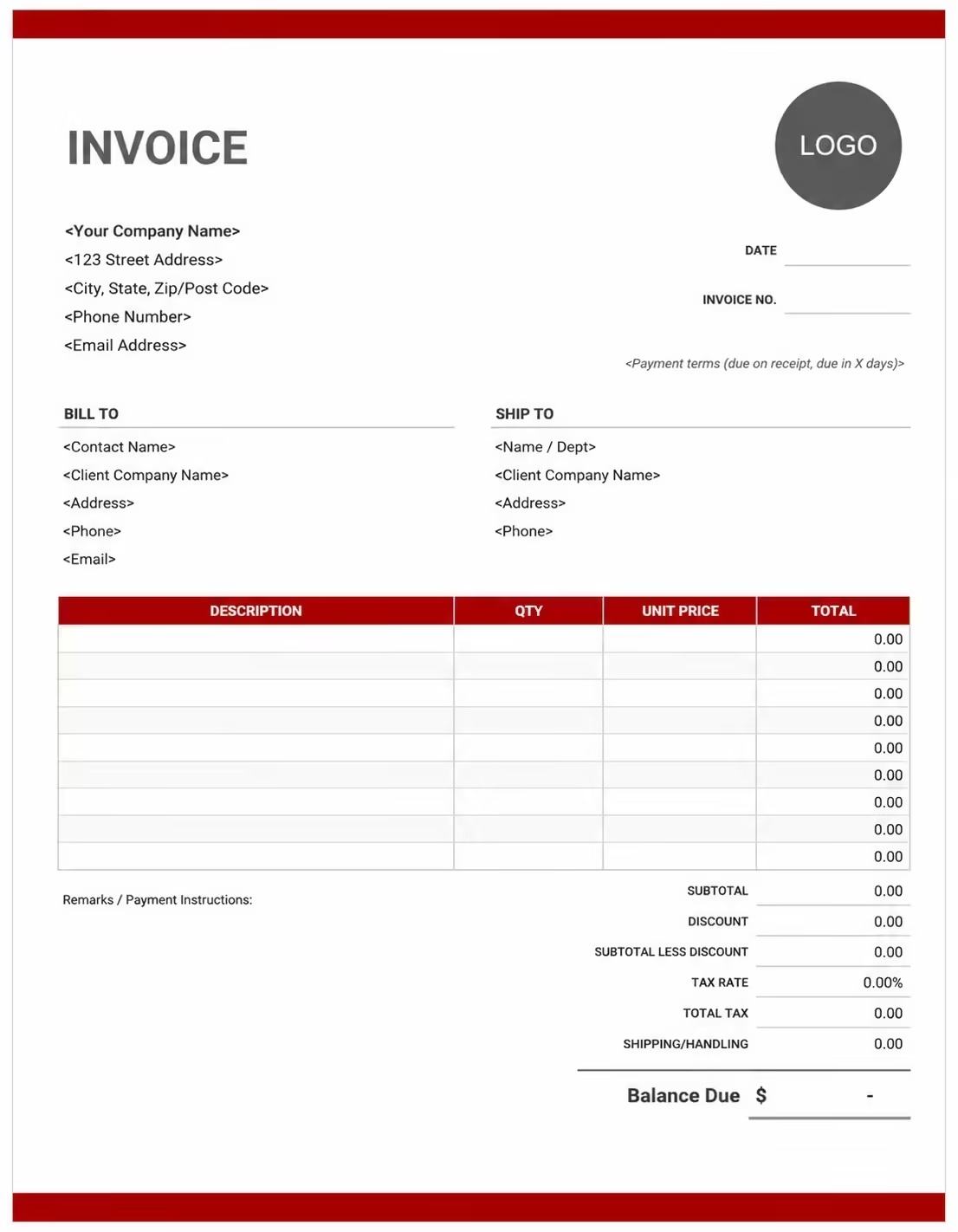
Free Finance Invoice Template
Use these templates for financial advisors, finance consultants, bookkeeping teams, fractional CFOs, analysts, tax support providers, budgeting specialists, finance agencies, and businesses billing for finance-related services.
How to Invoice for Finance Services
A good finance invoice should clearly show the client details, advisory or finance service provided, billing period, rate or fixed fee, reimbursable costs, taxes, payments already received, and final amount due.
Download Free TemplateIn 5 Steps:
- Confirm the client details, finance service scope, project name, reporting period, hourly rate, fixed fee, retainer amount, reimbursable costs, taxes, deposit terms, and payment due date before preparing the invoice.
- Add invoice details such as the invoice number, invoice date, due date, client name, company name, financial project name, account reference, and billing period.
- List each finance service clearly, including financial advisory, budgeting, forecasting, bookkeeping support, cash flow analysis, reporting, fractional CFO work, tax preparation support, or consultation sessions.
- Separate retainers, hourly consulting, fixed project fees, report preparation, transaction review, software costs, reimbursements, discounts, tax, deposits, and the final balance due so the client can review the invoice quickly.
- Send the invoice with payment methods, bank details, due date, late fee terms, report delivery notes, approval details, confidentiality notes, or next billing cycle information if applicable.
With Invoize, you can create finance invoices faster, save client and company details, reuse common finance service line items, add retainers and hourly work, include taxes or deposits, and track paid, unpaid, and overdue invoices from your phone.
What to Include in a Finance Invoice
A professional finance invoice should include the details needed to identify the client, service period, finance work completed, pricing, payment terms, and final balance.
Invoice and Client Details
- Invoice numberHelps track the invoice, payment record, client account, finance project, and billing history.
- Client name, company name, billing contact, and addressShows who requested the finance service and who is responsible for payment.
- Finance consultant, advisor, firm, or agency detailsShows who completed the finance work and where payment should be sent.
- Project name, account reference, report name, or engagement referenceConnects the invoice to the correct finance engagement, reporting cycle, advisory project, or client account.
- Invoice date, due date, service date, billing period, or reporting periodShows when the finance service was completed, which period is covered, and when payment is expected.
Finance Service Details
- Finance service descriptionExplains the work performed, such as financial planning, advisory support, budgeting, forecasting, bookkeeping support, reporting, or consultation.
- Engagement type or service categoryShows whether the invoice covers retainer work, hourly consulting, one-time reports, recurring bookkeeping, or project-based finance support.
- Hours, sessions, reports, transactions, deliverables, or package detailsShows how the finance service quantity and pricing were calculated.
- Rate, unit price, retainer fee, hourly fee, or fixed project priceShows the agreed pricing method for each line item.
- Report notes, approvals, or supporting detailsGives clients context for reviewing financial reports, statements, analysis, meeting notes, or deliverables.
Payment and Final Notes
- Service fees, advisory fees, report charges, and reimbursable costsSeparates different finance cost types so the client can review each amount clearly.
- Discounts, deposits, retainers, or advance paymentsShows prepaid amounts, retainer credits, package discounts, or payments already received.
- Subtotal, tax, fees, and total amount dueShows the final amount the client needs to pay.
- Payment methodsLists bank transfer, card payment, online payment, PayPal, Stripe, check, or other accepted payment options.
- Finance notes or payment termsRecords due date, late fees, confidentiality notes, report delivery notes, approval status, or next billing cycle details.
Billing Scenarios for Finance Businesses
Use clear invoice labels so clients understand the finance service delivered, billing period, consulting fees, retainer amounts, reimbursable costs, taxes, deposits, and final amount due.
| Scenario | Invoice line items | Best used for | How to describe it |
|---|---|---|---|
| Monthly finance retainer | Billing period, included finance services, monthly fee, extra work | Financial consultants, fractional CFOs, advisors, and recurring clients. | Show the month covered and list what is included in the retainer. |
| Financial planning session | Consultation date, session length, planning topic, hourly or session fee | Finance advisors and consultants. | Use session-based pricing and include the service date. |
| Budgeting and forecasting project | Forecast period, budget model, assumptions, report delivery, fixed fee | Finance consultants, analysts, and business advisors. | Mention the forecast period and deliverables included. |
| Cash flow analysis | Business period reviewed, analysis type, report, consultation, fee | Small business finance consultants and CFO services. | Add the analysis period and report name for clarity. |
| Bookkeeping support | Transaction review, reconciliations, reporting period, hourly or monthly fee | Bookkeepers, accounting support teams, and finance service providers. | List the billing period and service scope clearly. |
| Financial reporting package | Statements, dashboards, management reports, review meetings | Finance teams, analysts, and consultants. | Include report titles and delivery dates when relevant. |
| Fractional CFO services | Strategic finance support, meetings, planning, reporting, retainer fee | Fractional CFOs and outsourced finance providers. | Separate retainer services from extra project work. |
| Tax preparation support | Document review, schedules, support hours, filing preparation assistance | Tax support providers and finance professionals. | Mention whether the invoice is for support work, not legal or tax advice if needed. |
| Investment administration support | Portfolio support, reports, client servicing, documentation work | Finance administrators and advisory support teams. | List support tasks and reporting period carefully. |
| One-time finance consultation | Consulting topic, call length, recommendations, follow-up notes | Freelance finance consultants and business advisors. | Use hourly or session pricing and add meeting details. |
Create Invoice Now
☝️ Create a professional invoice in seconds.
Common Charges and Fees for Finance Invoices
Finance invoices may include advisory fees, consulting hours, retainers, reporting fees, bookkeeping support, software costs, reimbursable expenses, taxes, deposits, and late payment fees.
| Charge or service | Unit | When to use | How to show it |
|---|---|---|---|
| Finance consultation fee | Advisory calls, financial review, planning sessions, or business finance advice | Use for one-time consultations or hourly advisory work. | Finance consultation session |
| Monthly retainer | Recurring finance support, advisory access, reporting, and scheduled reviews | Use for ongoing clients with monthly service packages. | Monthly finance retainer |
| Fractional CFO fee | Strategic finance leadership, forecasting, reporting, and planning support | Use for outsourced CFO or senior finance services. | Fractional CFO services |
| Financial reporting fee | Management reports, dashboards, financial summaries, and review notes | Use when reports are prepared for clients. | Financial reporting package |
| Budgeting fee | Budget setup, forecasting, scenario planning, and financial model preparation | Use for budgeting and planning projects. | Budget and forecast preparation |
| Cash flow analysis fee | Cash flow review, projections, recommendations, and report preparation | Use for cash flow or working capital analysis. | Cash flow analysis |
| Bookkeeping support fee | Transaction review, categorization, reconciliation support, and records review | Use when bookkeeping help is billed separately. | Bookkeeping support services |
| Hourly consulting fee | Time-based finance work, research, meetings, and analysis | Use when billing by the hour. | Hourly finance consulting |
| Software or tool cost | Finance software, reporting tools, subscriptions, or client-approved platform costs | Use when software costs are reimbursed by the client. | Approved finance software cost |
| Document review fee | Reviewing statements, reports, records, spreadsheets, or client files | Use for review-heavy projects. | Financial document review |
| Rush fee | Expedited finance reports, urgent analysis, or short-deadline work | Use when the client requests faster delivery. | Rush delivery fee |
| Tax or VAT | Required tax based on location, service type, or business rules | Use when tax applies. | Sales tax / VAT |
| Late payment fee | Fee added after the invoice due date if allowed by agreement | Use when payment terms allow late fees. | Late payment fee |
| Deposit or advance payment | Upfront amount collected before work begins | Use for larger finance projects or retainers. | Project deposit received |
Common Finance Invoicing Mistakes
Finance invoices should be accurate, specific, and easy to review. Avoid unclear service descriptions, missing billing periods, mixed expenses, and vague payment terms.
| Mistake | Why it causes problems | How to fix it |
|---|---|---|
| Using vague service names | Clients may not understand whether the charge is for advisory work, reports, bookkeeping, or planning. | Use clear line items that describe each finance service. |
| Missing the billing period | Recurring retainers and monthly finance work become hard to match to the correct period. | Add the month, reporting period, or service dates. |
| Not separating retainers from extra work | Clients may dispute extra charges if they think everything is included in the retainer. | List retainer fees and out-of-scope work separately. |
| Combining software costs with service fees | Reimbursable costs can look like hidden service fees. | Separate software, tool, and reimbursement charges from professional fees. |
| Leaving out report details | Clients may not know which financial report or deliverable the invoice covers. | Add report names, delivery dates, or project references. |
| Forgetting deposits or advance payments | The client may overpay or question the final balance. | Show deposits, retainers, credits, and remaining balance clearly. |
| Using incorrect tax calculations | Tax errors can create accounting issues for both sides. | Apply the correct tax rules and review totals before sending. |
| No payment due date | Clients may delay payment if the expected due date is unclear. | Add a clear due date such as due on receipt, Net 7, Net 15, or Net 30. |
| Not including payment methods | The client may need to ask how to pay, slowing down collection. | Add bank, card, online payment, or check details. |
| Sending without reviewing totals | Finance clients expect accuracy, and small invoice errors can reduce trust. | Review rates, hours, taxes, discounts, and totals before sending. |
More Invoice Templates You May Like
Explore closely related invoice templates for finance work, similar services, and nearby billing scenarios before choosing the best format for your customer.
Questions
Frequently Asked Questions
What is a finance invoice?
A finance invoice is a billing document used by finance consultants, advisors, firms, fractional CFOs, analysts, bookkeepers, and finance service providers to charge clients for finance-related services such as planning, reporting, analysis, advisory work, retainers, and consulting.
What should a finance invoice include?
A finance invoice should include your business details, client details, invoice number, invoice date, due date, billing period, service descriptions, hours or deliverables, rates, subtotal, taxes, deposits, payments received, and final amount due.
Can I use this template for financial consulting?
Yes. You can use this template for financial consulting, planning sessions, cash flow analysis, budgeting, forecasting, business finance reviews, financial reports, and recurring advisory work.
Can I use this template for monthly finance retainers?
Yes. Add the billing period, retainer package, included finance services, monthly fee, and any extra work completed outside the retainer so the client can review the invoice clearly.
How do I invoice for hourly finance work?
List the service date, task description, number of hours, hourly rate, subtotal, tax if applicable, and final amount due. You can also include a brief timesheet note or project reference.
Should software costs be included in a finance invoice?
Software costs can be included if they are approved by the client, but they should be listed separately from your service fee so the client can see what is a reimbursable cost and what is professional service work.
Can this template be used by fractional CFOs?
Yes. Fractional CFOs can use this template for monthly retainers, strategic finance support, reporting, forecasting, management meetings, budgeting, and project-based financial leadership work.
Can I add taxes and discounts to a finance invoice?
Yes. Add tax, VAT, discounts, deposits, retainer credits, or advance payments before showing the final amount due. Make sure the total is easy for the client to verify.
What payment terms should I use for finance invoices?
Common payment terms include due on receipt, Net 7, Net 15, and Net 30. For recurring finance work, many providers request payment upfront or use a monthly retainer billing schedule.
Can I use this template for bookkeeping or accounting support?
Yes. You can use it for bookkeeping support, transaction review, reconciliations, financial reporting, accounting support, and related finance services. For dedicated accounting work, you can also use an Accounting Invoice Template.