
Free Recruitment Invoice Template
Free invoice templates for recruitment agencies, staffing firms, executive search consultants, headhunters, talent acquisition teams, temporary staffing providers, hiring consultants, HR service companies, and freelance recruiters. Download and edit in PDF, Word, Excel, Google Docs, or Google Sheets.
Use this recruitment invoice template to bill for placement fees, candidate sourcing, screening, interview coordination, retained search, temporary staffing, contract recruitment, onboarding support, job advertising, background checks, taxes, discounts, retainers, and final balances in a clear professional format.
Download the app and manage invoices anywhere


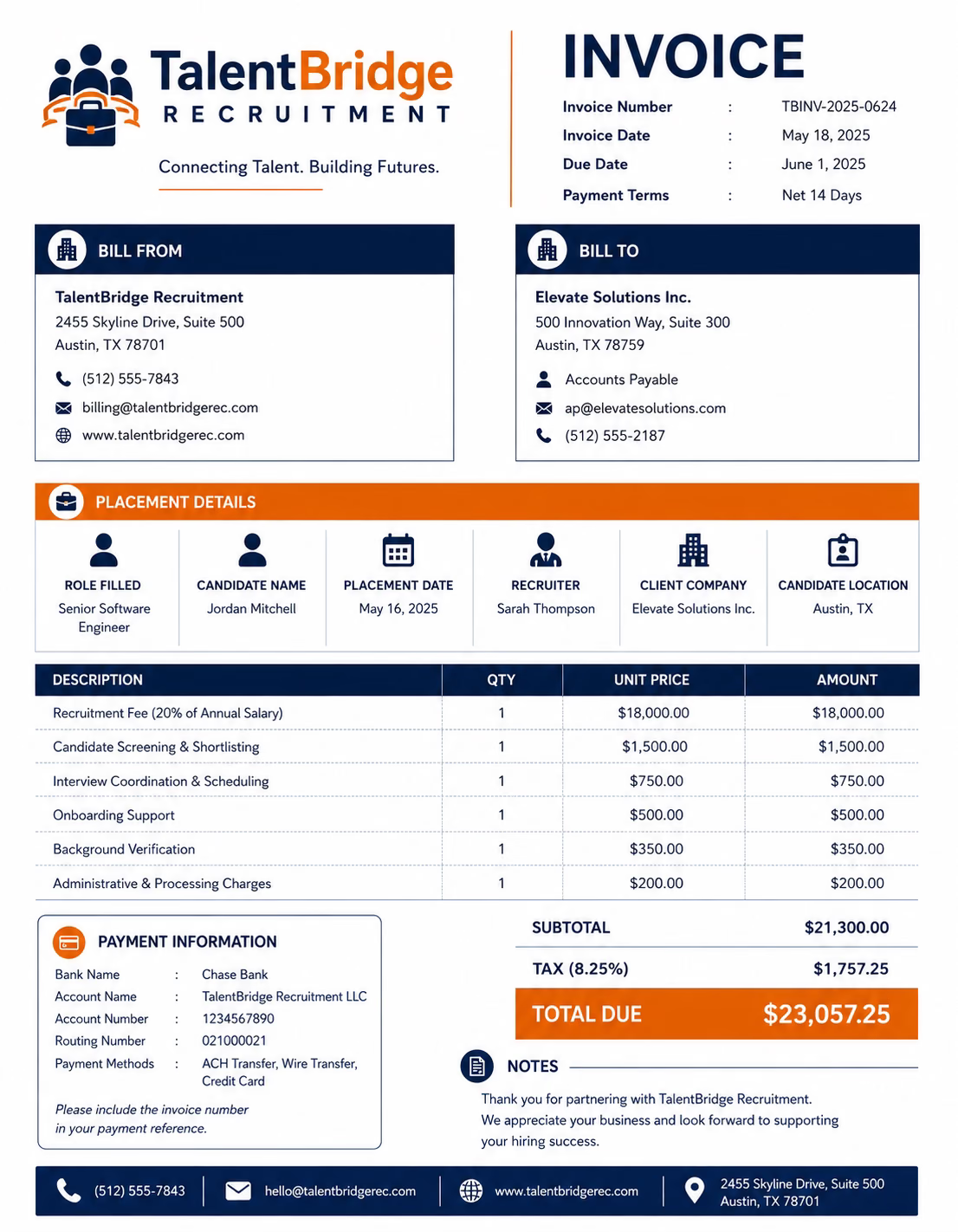
Download Free Recruitment Invoice Templates
Download a template, then edit it in PDF, Word, Excel, Google Docs, or Google Sheets. Print it, save it, or send it to employers, HR departments, hiring managers, finance teams, staffing clients, and business accounts when a placement, recruitment milestone, staffing period, or hiring service is ready for billing.
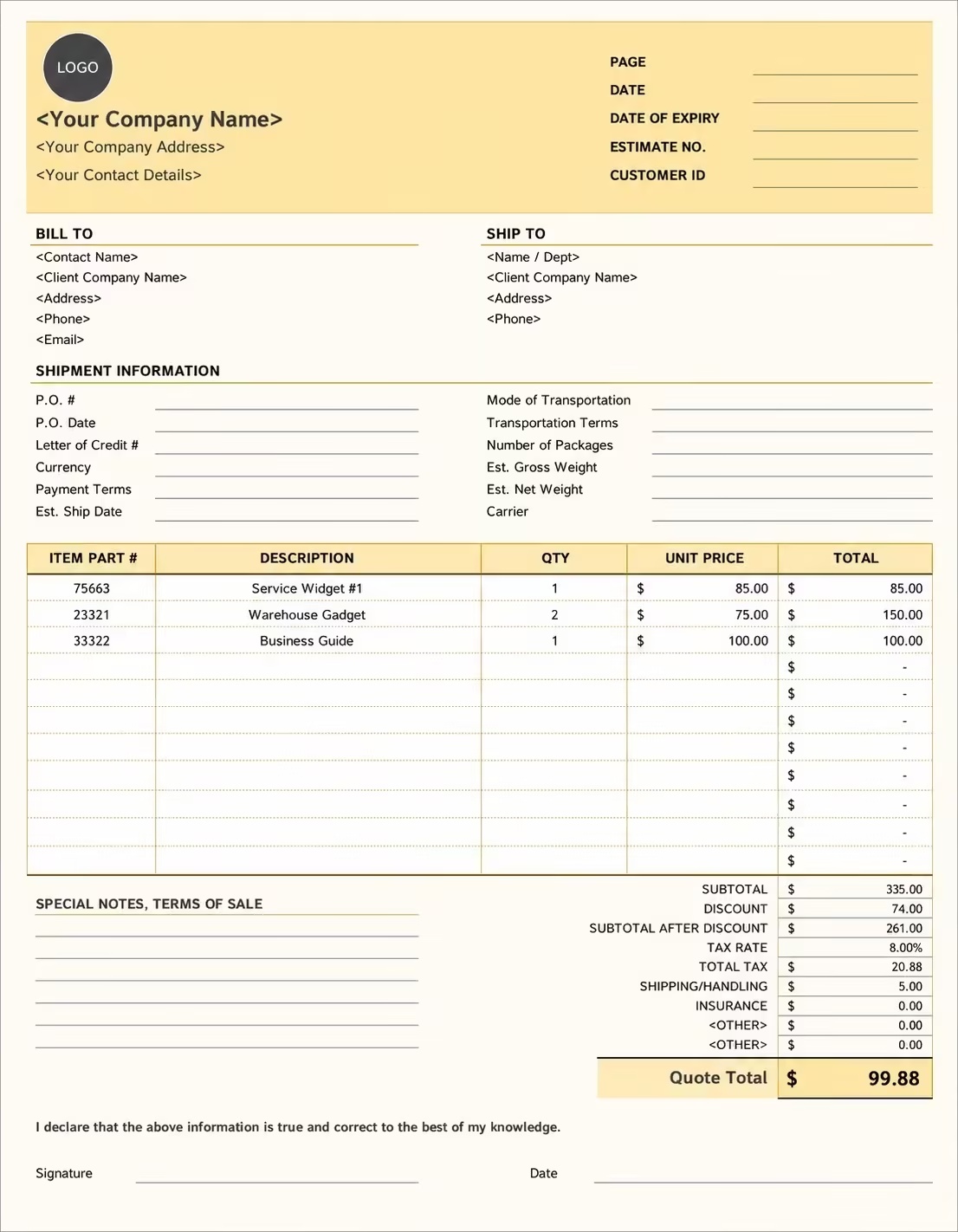
Editable Recruitment Invoice Template
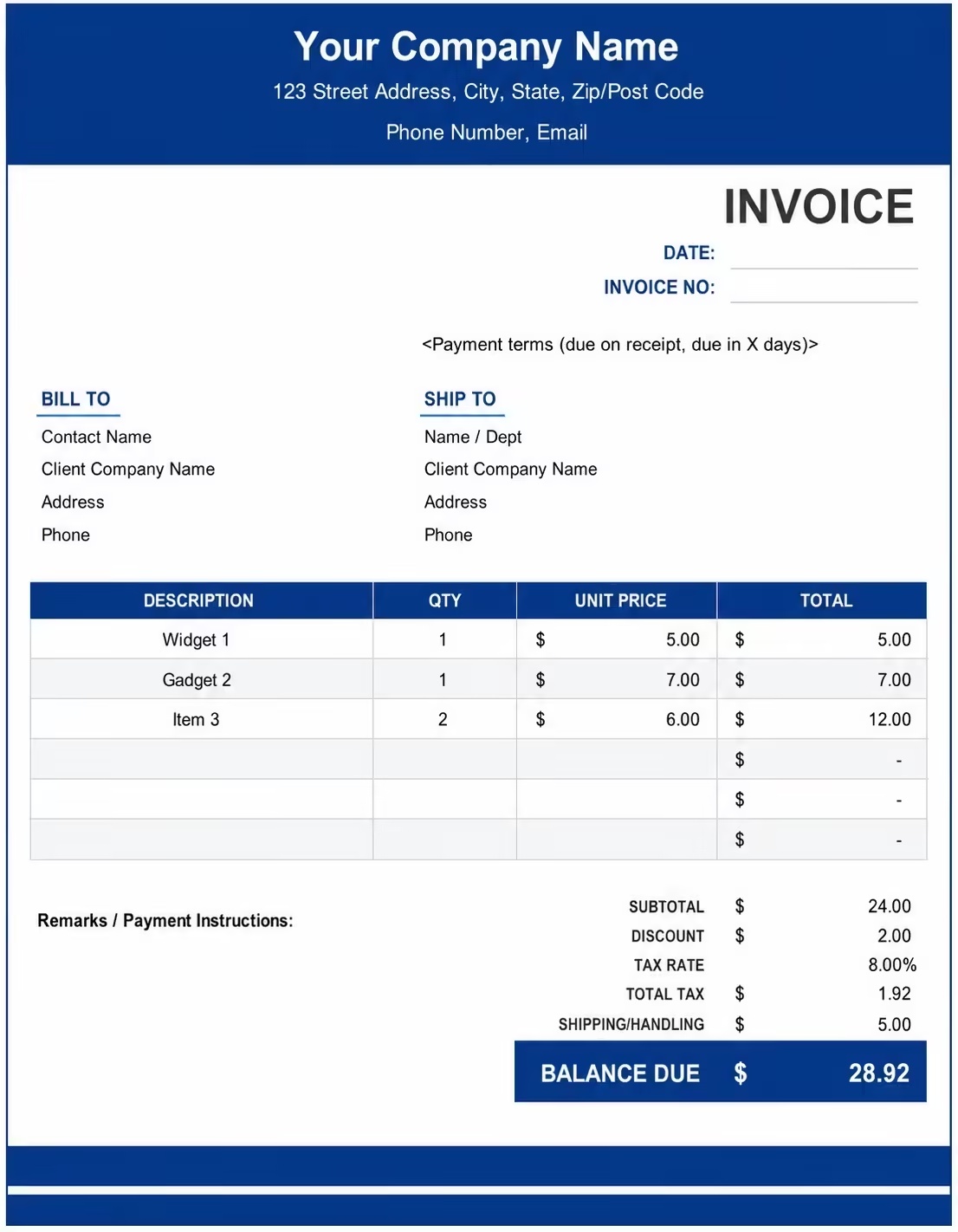
Printable Recruitment Invoice Template
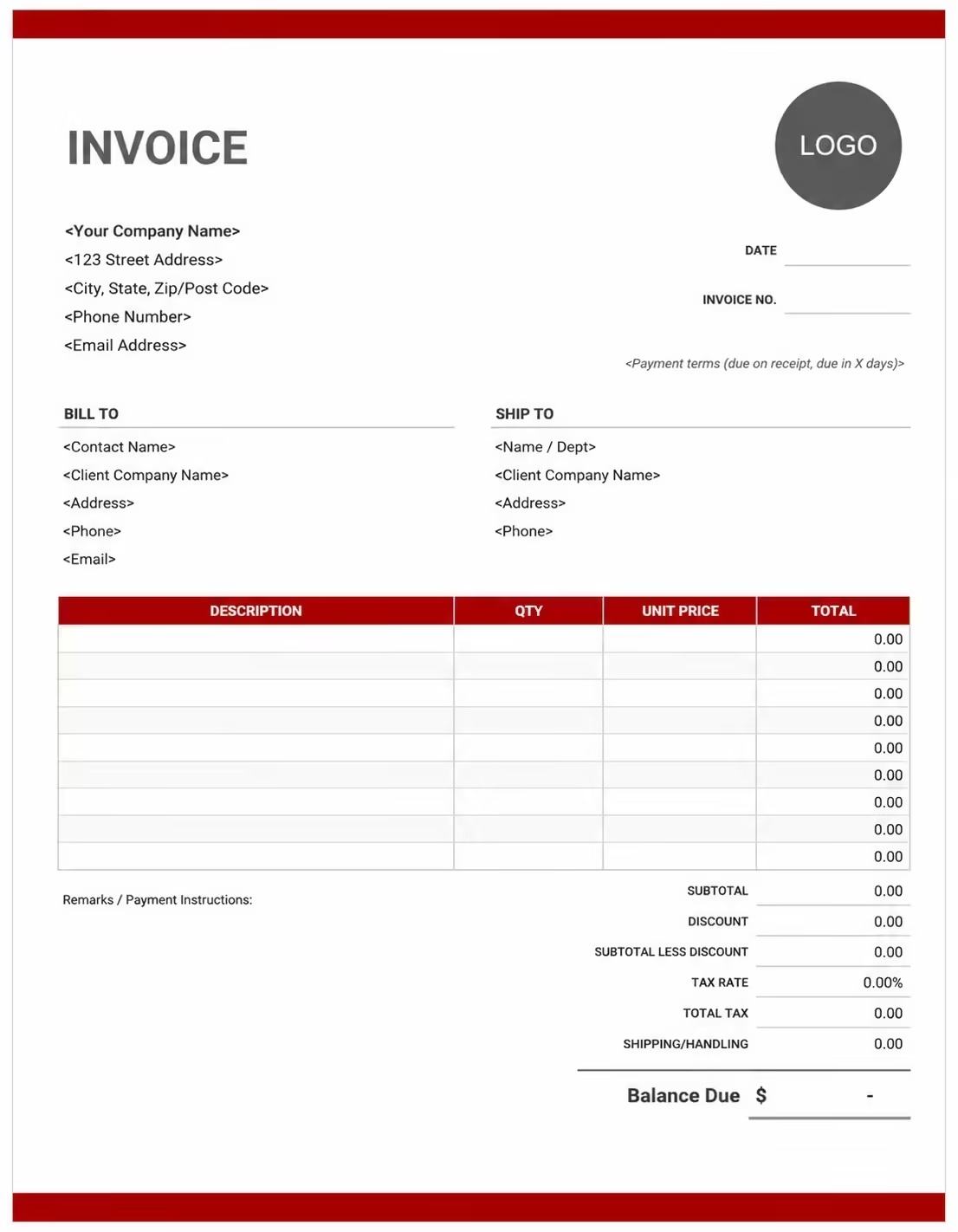
Free Recruitment Invoice Template
Use these templates for recruitment placement fees, retained search invoices, contingency recruitment billing, temporary staffing charges, contract recruiter fees, sourcing projects, screening services, candidate shortlist work, onboarding support, job advertising reimbursements, deposits, taxes, and final client balances.
How to Invoice for Recruitment Services
A recruitment invoice should clearly show who is being billed, which hiring service was provided, what role or candidate the fee relates to, how the recruitment fee was calculated, and when payment is due.
Download Free TemplateIn 5 Steps:
- Confirm the client company, hiring contact, role title, candidate name or reference, agreed fee structure, placement date, guarantee period, retainer terms, payment schedule, taxes, and reimbursable expenses before preparing the invoice.
- Add your recruitment agency or consultant details, client billing details, invoice number, invoice date, due date, job reference, candidate reference, purchase order, contract reference, or hiring project name if required.
- List each recruitment service clearly, such as candidate sourcing, screening, shortlist delivery, interview coordination, placement fee, retained search milestone, temporary staffing period, or onboarding support.
- Show how the fee is calculated, including percentage of salary, fixed placement fee, hourly recruiter rate, daily staffing rate, retainer stage, reimbursable expenses, discounts, taxes, deposits, and total balance due.
- Include payment instructions, accepted payment methods, due date, late payment terms, guarantee or replacement notes, invoice approval contact, and any hiring agreement references before sending the invoice.
With Invoize, recruitment agencies and hiring consultants can create invoices faster, save client details, reuse common recruitment line items, add taxes and discounts, track payment status, and send professional PDF invoices without rebuilding each recruitment invoice from scratch.
What to Include in a Recruitment Invoice
A professional recruitment invoice should include the details needed to identify the agency, client, role, candidate or staffing period, recruitment services provided, fee calculation, payment terms, and final balance due.
Invoice and Client Details
- Invoice numberHelps track the recruitment fee, placement record, client account, payment status, guarantee period, and future billing communication.
- Recruitment business detailsShows your agency name, consultant name, address, email, phone number, website, tax details, and logo.
- Client company detailsIncludes the employer name, billing contact, hiring manager, HR contact, email, phone number, and billing address.
- Role, job, or candidate referenceConnects the invoice to a vacancy, job title, candidate placement, search assignment, purchase order, or hiring project.
- Invoice date, due date, and contract referenceShows when the invoice was issued, when payment is due, and which recruitment agreement or hiring contract applies.
Recruitment Service Details
- Service descriptionExplains each recruitment service being billed, such as sourcing, screening, shortlist delivery, interviews, retained search, placement, or temporary staffing.
- Candidate or placement detailsIdentifies the candidate, start date, role title, salary basis, placement milestone, or staffing period where appropriate.
- Fee structureShows whether the invoice is based on a placement percentage, fixed fee, hourly rate, daily rate, retainer stage, or project package.
- Quantity, hours, or billing periodLists recruiter hours, days worked, staffing dates, number of candidates, search milestones, or temporary staffing periods.
- Expenses and reimbursementsSeparates job advertising, background checks, travel, assessment tools, candidate testing, or other approved costs from service fees.
Payment and Final Notes
- Subtotal, tax, and totalShows the recruitment fee before and after taxes, discounts, retainers, reimbursable costs, deposits, and other adjustments.
- Retainers or depositsRecords upfront payments, retained search stages, partial payments, or previously paid recruitment fees.
- Balance dueShows the remaining amount the client, employer, or hiring company needs to pay.
- Payment termsClarifies due date, accepted payment methods, bank details, late payment terms, and invoice approval instructions.
- Guarantee or replacement notesMentions replacement guarantees, refund conditions, probation terms, or placement agreement notes where applicable.
Billing Scenarios for Recruitment Businesses
Use clear recruitment invoice labels so employers, HR teams, hiring managers, and finance departments understand the service provided, role billed, fee calculation, taxes, expenses, and final amount due.
| Scenario | Invoice line items | Best used for | How to describe it |
|---|---|---|---|
| Permanent placement invoice | Candidate name, role title, start date, salary, placement percentage, fee | Recruitment agencies billing a client after a successful hire. | Show the salary basis, agreed percentage, placement date, and final fee clearly. |
| Retained search invoice | Retainer stage, search milestone, role, agreed fee, due date | Executive search firms and specialist recruiters using staged billing. | Label each retainer milestone so the client understands the payment stage. |
| Contingency recruitment invoice | Successful placement, role reference, agreed fee, guarantee terms | Recruiters billing only after the client hires a candidate. | Reference the hiring agreement and include the guarantee or replacement period if applicable. |
| Temporary staffing invoice | Staff names or IDs, dates worked, hours, rates, overtime, taxes | Staffing firms billing weekly or monthly temporary labor. | List the staffing period and separate standard hours, overtime, and other charges. |
| Contract recruiter invoice | Recruiter hours, hourly rate, project name, billing period | Independent recruiters billing clients by the hour or project. | Use timesheet references or weekly/monthly billing periods for clarity. |
| Candidate sourcing project | Sourcing hours, shortlist count, job title, platform costs | Recruiters providing sourcing without final placement responsibility. | Explain the deliverables, such as candidate list, outreach, and screening notes. |
| Screening and assessment invoice | Candidate checks, interview screening, test fees, background checks | Recruitment providers offering evaluation and screening services. | Separate assessment fees, third-party costs, and recruiter service charges. |
| Job advertising reimbursement | Job board names, ad dates, posting cost, approval reference | Agencies paying job advertising costs on behalf of clients. | Attach or reference approved advertising spend and keep it separate from service fees. |
| Recruitment process outsourcing invoice | Monthly service fee, recruiter support, roles handled, reports | RPO providers and outsourced hiring teams. | Include billing period, covered roles, included services, and any extra charges. |
| Onboarding support invoice | Offer management, documentation, onboarding coordination, start-date support | Recruiters or HR consultants supporting candidates after selection. | Mention the candidate start date, onboarding milestone, and included support tasks. |
Create Invoice Now
☝️ Create a professional invoice in seconds.
Common Charges and Fees for Recruitment Invoices
Recruitment invoices often include placement fees, retainers, hourly recruiting work, temporary staffing charges, sourcing fees, screening costs, advertising reimbursements, taxes, deposits, and late payment charges.
| Charge or service | Unit | When to use | How to show it |
|---|---|---|---|
| Placement fee | The agreed fee for successfully placing a candidate with the client. | Use for permanent hires, contingency placements, and successful recruitment outcomes. | Permanent placement fee for Marketing Manager role |
| Retained search fee | A staged or upfront fee for executive or specialist search work. | Use for executive search, senior roles, or exclusive hiring assignments. | Retained search milestone payment |
| Sourcing fee | Candidate research, outreach, and shortlist preparation. | Use when billing sourcing as a separate project or service. | Candidate sourcing and shortlist delivery |
| Screening fee | CV screening, phone interviews, skills checks, and candidate evaluation. | Use when screening is billed separately from placement. | Candidate screening and assessment |
| Temporary staffing fee | Labor supplied for a defined shift, week, or billing period. | Use for temp staffing, contract workers, or labor hire. | Temporary staffing services for weekly period |
| Hourly recruiting fee | Recruiter time charged by the hour. | Use for freelance recruiters, contract recruiters, or project recruiting support. | Recruiter hours for hiring project |
| RPO monthly fee | Recurring outsourced recruitment process support. | Use for ongoing recruitment process outsourcing agreements. | Monthly recruitment process outsourcing fee |
| Job advertising cost | Approved job board, sponsored listing, or campaign costs. | Use when ad spend is paid by the recruiter and reimbursed by the client. | Approved job advertising reimbursement |
| Background check fee | Third-party checks, references, compliance screening, or verification costs. | Use when background checks are billable to the client. | Candidate background check fee |
| Assessment or testing fee | Skills tests, psychometric assessments, or technical evaluations. | Use when candidate assessments are charged separately. | Candidate assessment and testing |
| Travel or interview coordination cost | Travel, meeting, venue, or interview coordination expenses. | Use only when approved and billable under the recruitment agreement. | Approved interview coordination expense |
| Replacement or guarantee adjustment | Credit or adjustment related to a replacement guarantee. | Use when applying a credit under agreed placement terms. | Placement guarantee adjustment |
| Tax or VAT | Required tax based on location and service type. | Use when sales tax, VAT, or other tax applies to recruitment services. | Sales tax / VAT |
| Late payment fee | Additional fee for invoices paid after the due date. | Use only when allowed by contract terms. | Late payment fee |
Common Recruitment Invoicing Mistakes
Recruitment invoices should avoid vague placement details, unclear fee calculations, missing role references, mixed reimbursable costs, and incomplete payment or guarantee terms.
| Mistake | Why it causes problems | How to fix it |
|---|---|---|
| Not naming the role or candidate | Clients may not know which hire or search the invoice relates to. | Include the job title, candidate name or reference, placement date, and hiring project. |
| Unclear placement fee calculation | A percentage fee can be disputed if the salary basis is missing. | Show salary basis, agreed percentage, fixed fee, or retainer amount clearly. |
| Missing the recruitment agreement reference | Finance teams may delay approval without the contract or purchase order reference. | Add agreement number, purchase order, client reference, or hiring project name. |
| Combining expenses with service fees | Advertising or background check costs can look like hidden fees. | Separate reimbursable expenses from recruitment service charges. |
| Forgetting the guarantee period | Clients may ask about replacement terms after the invoice is sent. | Add a short note about the agreed replacement or guarantee policy where relevant. |
| Leaving out the billing period | Temporary staffing and RPO invoices can be confusing without dates. | Add weekly, monthly, or project billing periods and timesheet references. |
| Not showing deposits or retainers paid | Clients may be charged the wrong remaining balance. | Show retainers, upfront payments, partial payments, and balance due clearly. |
| Using vague service descriptions | Generic line items can slow down invoice approval. | Describe sourcing, screening, placement, staffing, advertising, or assessment services clearly. |
| Missing taxes or VAT | Tax mistakes can create accounting issues for both parties. | Add the correct tax line where applicable and calculate totals carefully. |
| No due date or payment terms | Clients may delay payment without a clear deadline. | Add due date, accepted payment methods, bank details, and late payment terms. |
More Invoice Templates You May Like
Explore closely related invoice templates for recruitment work, similar services, and nearby billing scenarios before choosing the best format for your customer.
Questions
Frequently Asked Questions
What is a recruitment invoice?
A recruitment invoice is a billing document used by recruitment agencies, staffing firms, executive search consultants, and freelance recruiters to charge clients for placement fees, sourcing, screening, temporary staffing, retained search, or hiring support services.
What should a recruitment invoice include?
A recruitment invoice should include agency details, client details, invoice number, invoice date, due date, role or candidate reference, service descriptions, fee structure, taxes, expenses, retainers, payments received, and the final balance due.
Can I use this template for placement fees?
Yes. You can use it to bill permanent placement fees, contingency recruitment fees, executive search fees, and fixed placement charges. Include the role, candidate reference, salary basis, agreed percentage or fixed fee, and payment terms.
Can I use this template for temporary staffing?
Yes. Add the staffing period, worker names or references, hours, rates, overtime, taxes, and any approved expenses. This makes the invoice suitable for weekly or monthly staffing billing.
Should I include the candidate name on a recruitment invoice?
You can include the candidate name or candidate reference when allowed by your agreement and privacy rules. If needed, use a role title, placement reference, or hiring project ID instead.
How do I invoice for retained search?
List the retainer stage, search milestone, role title, agreed fee, invoice date, due date, and any expenses. Retained search invoices often use upfront, shortlist, and placement-stage billing.
Can I add job advertising costs?
Yes. Add job board costs, sponsored listings, or recruitment advertising expenses as separate reimbursable line items, especially when the client approved them before billing.
Can I include taxes or VAT on recruitment invoices?
Yes. Add sales tax, VAT, or other applicable taxes based on your location, client location, and service rules. Keep the tax amount separate from the recruitment service subtotal.
What payment terms are common for recruitment invoices?
Common recruitment payment terms include due on receipt, Net 7, Net 14, Net 15, or Net 30. Placement invoices may also follow the terms in the recruitment agreement.
Can freelance recruiters use this template?
Yes. Freelance recruiters can use this template for hourly recruiting, sourcing projects, candidate screening, placement fees, contract recruiting, and project-based hiring support.